


You're sitting in the chair, the machine inches toward your eye, and — puff. It's over in a second. Then the technician hands you a printout with a number you've never seen before, says "the doctor will discuss this with you," and you're left wondering what any of it actually means.
That puff of air measures the intraocular pressure- the fluid pressure inside your eye, using a non-contact technique. It's one of the key data points optometrists use to screen for glaucoma. Here's what your number actually tells you, when to take it seriously, and what happens if it comes back high.
What the Air Puff Test Actually Does
Non-contact tonometry devices work by pushing air at your cornea and then measuring tiny, split-second changes in the shape of your cornea as the air bounces off its surface. The machine calculates how much force was needed to flatten (applanate) your cornea — and converts that into a pressure reading in millimeters of mercury (mmHg).
No eye drops, no probe touching your eye. The sudden sound and surge of air can still cause physical or psychological discomfort in some patients — which is a clinical way of saying the startle reaction is completely normal.
The test takes under five minutes for both eyes. Because IOP varies during the cardiac cycle, it's important to average a series of readings — most modern machines do this automatically and take three readings per eye.
The air puff test is a screening tool, not a definitive diagnosis. At low and normal IOP ranges, the air puff tonometer and Goldmann applanation tonometry show similar results, but the air puff can overestimate at higher pressure ranges. That matters for how you interpret a borderline or high reading.
What Do Your Numbers Mean?
Normal IOP ranges between 10 and 21 mmHg. Most people land somewhere between 12 and 18. Here's how to read the ranges:
| IOP Reading | Category | What It Generally Means |
|---|---|---|
| Below 10 mmHg | Low (Hypotony) | May warrant further evaluation |
| 10–21 mmHg | Normal | Healthy range for most people |
| 21–24 mmHg | Borderline | Monitor; context-dependent |
| 25 mmHg and above | Elevated (Ocular Hypertension) | Follow-up recommended |
Readings of 20–22 mmHg fall at the upper end of normal or borderline ocular hypertension. Without additional risk factors like optic nerve damage or thin corneas, many doctors monitor these levels without immediate treatment.
One number alone doesn't tell the full story. Healthy eyes fluctuate 3–5 mmHg daily, typically peaking in the morning and dropping by evening. Glaucoma patients may experience fluctuations exceeding 10 mmHg, which increases disease risk and requires closer monitoring.
And here's something worth knowing: normal-tension glaucoma occurs when optic nerve damage develops despite pressures below 21 mmHg. So a normal reading doesn't completely rule out glaucoma — which is why the air puff is always just one part of a comprehensive exam, not the whole picture.
When a High Reading Isn't the Full Story
If your number came back above 21 and you're now deep in a search spiral — slow down. A single elevated air puff reading is not a glaucoma diagnosis.
Corneal thickness matters a lot. Thicker corneas give falsely high readings. Pachymetry (a quick, painless test that measures central corneal thickness) is often ordered alongside tonometry to correct for this effect.
The air puff can run high. Non-contact air-puff tonometers tend to overestimate IOP compared to Goldmann applanation tonometry — nonetheless, their results show high agreement in the normal range. So a reading of 23 on the air puff might correspond to 20–21 on the gold-standard Goldmann test.
Time of day affects your reading. Pressure is generally highest in the morning. A reading taken at 8am will often be higher than one taken at 3pm in the same person.
Tight clothing around the neck can inflate the number. This is legitimately documented — wearing a tight collar during the test can increase IOP readings.
Context, corneal thickness, the time the test was taken, and what method is used all factor into how your doctor interprets the result. One high air puff reading typically leads to re-testing with Goldmann tonometry before any clinical decision is made.
Do Contact Lenses Affect Your Eye Pressure Reading?
This comes up constantly for contact lens wearers, and the short answer is: it depends on the type of test and the type of lens.
For the non-contact air puff test, soft contact lenses generally have minimal impact on IOP readings. The test doesn't require direct corneal contact, and soft lenses don't significantly alter the mechanical response of the cornea to the air pulse in most cases.
For Goldmann applanation tonometry (the gold-standard test that involves a probe touching the cornea), soft lenses, which can be stained by the fluorescein dye, should be removed before testing.
If your exam involves the air puff only and you forget to take your lenses out first, it's worth letting the technician know. For routine screening, it's unlikely to dramatically change the result, but for any follow-up or precision testing, lenses should always come out.
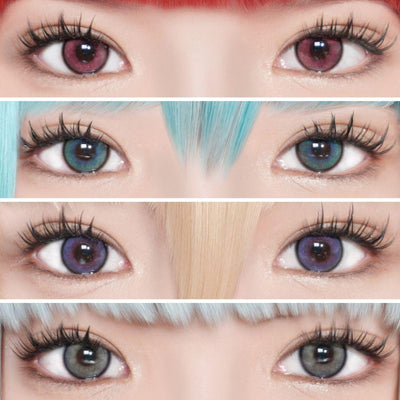
Wearing contact lenses — including colored cosmetic lenses — does not directly cause high eye pressure. IOP is determined by the production and drainage of aqueous fluid inside the eye, not by what's sitting on the surface of the cornea. However, wearing soft contact lenses, including color contact lenses, can indirectly impact IOP. They can potentially result in corneal edema, which can influence IOP readings. Wearing soft contact lenses that aren't properly fitted, beyond recommended hours, or poor lens hygiene can affect overall eye health in ways that show up in a comprehensive exam. Regular eye exams are part of responsible contact lens wear for this reason.
If Your Reading Is High — What Happens Next
If your pressure readings are high, your doctor may perform additional imaging to evaluate optic nerve health, corneal thickness, and visual field performance. Here's what that typically looks like:
Step 1: Confirm with Goldmann tonometry. The air puff reading gets verified with the gold-standard test. This requires numbing drops and a brief probe contact but is painless and takes seconds.
Step 2: Pachymetry. Corneal thickness is measured to adjust the IOP reading accordingly. Thicker corneas can make pressure look higher than it is; thinner corneas can mask high pressure.
Step 3: Optic nerve assessment. The doctor examines the optic nerve directly (often through dilation) and may use OCT imaging to detect any structural changes.
Step 4: Visual field testing. This checks your peripheral vision for any gaps or defects that would suggest glaucoma damage has begun.
Ocular hypertension is defined as an IOP greater than 21 mmHg in one or both eyes at two or more office visits, with a normal-appearing optic nerve and no signs of glaucoma on visual field testing. That's the distinction that matters: ocular hypertension is elevated pressure without damage. Glaucoma is when damage has actually occurred.
Not all patients with ocular hypertension require treatment right away. Many can be safely monitored with regular follow-up visits, while others benefit from starting pressure-lowering therapy to reduce their risk of developing glaucoma. The decision depends on your individual combination of risk factors.
Over a 5-year period, the incidence of glaucomatous damage in people with ocular hypertension is about 2.6–3% for pressures of 21–25 mmHg, and 12–26% for pressures of 26–30 mmHg. Most people with borderline high pressure do not develop glaucoma — and those who do are caught earlier because they're attending regular eye exams and being monitored.
Treatment for high IOP includes prescription eye drops that decrease fluid production or increase drainage, laser treatment to clear a blocked drainage angle, or surgery to reduce pressure inside the eye.
Can You Lower Eye Pressure Naturally?
If your doctor has put you in a "monitor closely" category but hasn't prescribed treatment yet, lifestyle factors can genuinely influence IOP.
Aerobic exercise. Regular moderate exercise (walking, cycling, swimming) has been shown to modestly reduce IOP over time. This doesn't substitute for medication if your doctor recommends it — but it's a real effect.
Sleep position. Sleeping with your head slightly elevated (about 20 degrees) reduces nocturnal IOP spikes. Flat on your back or face-down positions increase pressure.
Caffeine in moderation. Caffeine has a short-term IOP-raising effect. If you have elevated readings, drinking coffee or energy drinks right before an eye exam will skew your numbers.
Tight collars and restrictive clothing around the neck. As noted above, this is documented and avoidable.
Stay hydrated but don't over-hydrate rapidly. Drinking a large volume of water very quickly can cause a temporary IOP spike. Normal, consistent hydration is fine and doesn't affect eye pressure.
None of these replace medical monitoring or treatment. They're context-useful if you're in the gray zone and your doctor is watching before deciding on therapy.
How Often Should You Get Eye Pressure Checked?
For most adults without risk factors: every 1–2 years as part of a comprehensive eye exam. For contact lens wearers, annual exams are standard practice regardless — which conveniently also covers your IOP check.
Patients with borderline elevation and no other risk factors may be seen once or twice a year. Those with higher pressure readings, thinner corneas, or a strong family history of glaucoma may need visits every three to six months.
Risk factors that put you in a higher-monitoring category include:
- Family history of glaucoma
- Age over 60
- African, Asian, or Hispanic descent (higher statistical prevalence)
- High myopia (nearsightedness above −6.00D)
- Previous eye surgery or trauma
- Use of corticosteroid medications (including eye drops)
- Previously documented thin corneas
If you wear contact lenses, you're already booking annual exams for your prescription check. Make sure your optometrist includes IOP measurement every time — most will do it automatically as part of a comprehensive exam, but it's worth confirming that the air puff test is included, not just a quick visual acuity check.
Frequently Asked Questions
What is a normal eye pressure reading from the air puff test?
Normal IOP is between 10 and 21 mmHg. Most healthy adults read somewhere between 12 and 18 mmHg. A single reading slightly above 21 doesn't automatically mean anything is wrong — your doctor will consider corneal thickness, the type of tonometer used, time of day, and other factors before drawing any conclusions.
Can the air puff test give a false high reading?
Yes. Non-contact tonometry tends to overestimate pressure compared to Goldmann applanation tonometry, especially at higher pressure ranges. Thick corneas also cause falsely elevated readings. This is why a high air puff result typically leads to confirmatory testing, not an immediate diagnosis.
Do I need to remove my contact lenses for the air puff test?
For the air puff (non-contact tonometry), it's generally fine to leave soft lenses in — but tell your technician you're wearing them. For Goldmann applanation tonometry, lenses must be removed. When in doubt, take them out and bring your glasses as backup.
Does wearing colored contact lenses increase eye pressure?
No. Contact lenses, including colored cosmetic lenses, sit on the surface of the cornea and do not affect the production or drainage of aqueous fluid inside the eye. IOP is determined by internal fluid dynamics, not by what's on the corneal surface.
What happens if my eye pressure is consistently high?
Your doctor will confirm the reading with Goldmann tonometry, measure your corneal thickness, examine your optic nerve, and likely run a visual field test. If true ocular hypertension is confirmed, you may be monitored regularly or started on pressure-lowering eye drops. Many people with elevated IOP never develop glaucoma.
Is the air puff test the gold standard for measuring eye pressure?
No. Goldmann applanation tonometry is the gold standard. The air puff (NCT) is a fast, comfortable, no-contact screening tool — accurate enough for routine checks but not the definitive measure used for diagnosis or treatment decisions.
Shop FDA-Cleared Contact Lenses
Whether you're picking up colored lenses for everyday wear or replacing your clear prescription pair, EyeCandys carries FDA-cleared contacts in a wide range of powers, fits, and styles. Over 400,000 customers. 4.8 stars across 6,900+ reviews.