

What Is PD And Why Is It Important?
Introduction
Pupillary Distance (PD) may seem like a small detail, but it plays a crucial role in ensuring that your prescription eyewear functions correctly. PD measures the distance between the centers of your pupils, and accurate measurement is key to comfortable, clear vision—especially for high eyeglass prescriptions The higher the eyeglass prescription, the more important pupillary distance becomes. An inaccurate PD measurement, especially with higher prescriptions, can create a prism effect, causing dizziness, headaches, and distorted vision. In this article, we’ll explore exactly what PD is, why it matters, and how it affects your vision.
What Exactly Is Pupillary Distance (PD)?
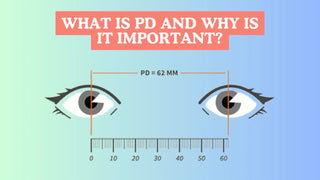
Pupillary Distance (PD) is the distance between the centers of your pupils, measured in millimeters. This measurement is essential for positioning your lenses correctly in your frames, aligning them with your optical centers for optimal vision correction.
There are two types of PD measurements:
- Binocular PD: The total distance between the center of your right pupil and the center of your left pupil.
- Monocular PD: The distance from the bridge of your nose to each pupil individually, used when lenses need to be centered differently for each eye.
In some cases, you may also encounter different PD measurements for distance vision and near vision (used for reading glasses).
Why Is PD Important?
PD ensures that the lenses' optical centers align precisely with your pupils. If the PD is incorrect, even by a few millimeters, it can cause a range of visual problems, including:
- Eye strain
- Blurry or distorted vision
- Headaches
- Difficulty adapting to new glasses
This is particularly crucial for people wearing multifocal lenses, progressive lenses, or high-prescription glasses, where even slight misalignments can significantly impact vision and comfort.
How PD Is Measured
Professional Measurement
Most opticians will measure your PD during a comprehensive eye exam using a pupillometer or a millimeter ruler for manual measurement. This professional method is the most accurate and reliable.
Self-Measurement
You can measure your PD at home using a ruler and a mirror, or with the help of a friend. Several apps also claim to measure PD using smartphone cameras. However, self-measured PD can be less accurate, and even small inaccuracies can impact your visual experience with new glasses.
Why Accuracy Matters
A PD that is just 1–2 millimeters off can lead to issues with how you perceive depth, clarity, and comfort. Therefore, especially if ordering glasses online, it’s best to have a professionally measured PD.
Common Misconceptions About PD
- Myth: PD is only important for people with strong prescriptions.
- Reality: PD matters for everyone wearing glasses. Even low prescriptions require proper lens alignment for comfort and clarity.
- Myth: Any PD number is fine for all types of glasses.
- Reality: Incorrect PD can lead to discomfort, especially with progressive, bifocal, or high prescription lenses where precision is critical.
- Myth: PD never changes.
- Reality: While PD remains relatively stable after adolescence, slight changes can occur, particularly with significant weight changes or certain health conditions.
FAQs About PD
Can My PD Change Over Time?
In general, PD stabilizes after early adulthood. However, health conditions or facial surgeries can cause changes that may necessitate remeasurement.
What Is the Average PD for Adults?
The average PD for adults is between **54 and 74 millimeters**. For children, it typically ranges from **40 to 54 millimeters**.
Do I Need Different PDs for Reading Glasses and Distance Glasses?
Yes, sometimes. Your "near PD" (used for reading or computer glasses) is slightly smaller than your distance PD because your eyes converge slightly when looking at near objects.
Conclusion
Having a complete nail care kit ensures healthy, beautiful nails with minimal effort. Whether you prefer classic polish, trendy nail art, or hassle-free gel nail stickers, investing in quality nail tools and products makes all the difference.
For an effortless manicure solution, explore EyeCandys Gel Nail Stickers and enjoy salon-quality nails at home!