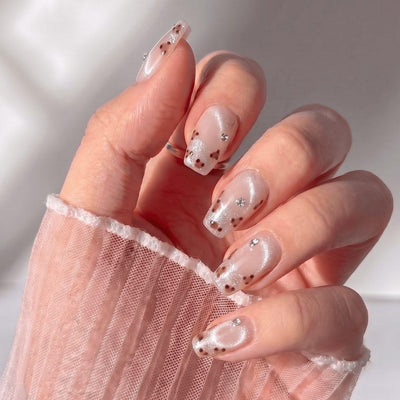

Short nails are having a moment. And not because they are a downgrade.
For most of the past decade, nail length functioned as a status signal. Longer meant you had the time, the budget, and the willingness to outsource your hands. Short nails read as utilitarian or unfinished.
That has flipped. Short nails now signal something more interesting going on than fussing over a nail tip: a job that uses your hands, a sport you actually do, a child, a partner, a craft. They say you value your time, your dexterity, and your nail health over pure ornament.
The science has caught up. Dermatology and hand-therapy literature have spent twenty years quietly converging on the same conclusion. Nails at roughly 2 mm past the fingertip are stronger, cleaner, and more functional than anything longer. A 2025 study in the Journal of Hospital Infection found that long nails carried pathogenic micro-organisms at an odds ratio of 7.1 (95% CI 1.83 to 27.39, p<0.001) compared to short nails. The mechanical, hygiene, and chemical cases all point in the same direction.
Below is what the research actually says, why long nails fail in the specific ways they do, and how EyeCandys short press-ons paired with Insanely Sticky Tabs are designed around the same dermatology consensus.
The Four Guardian Seals of Your Nail
Your nail is not a sheet of keratin sitting on skin. It is a sealed compartment with four anatomical barriers that protect the nail matrix (where new nail grows) and the nail bed (the living tissue under the plate).
The Cuticle and Proximal Nail Fold
These two structures seal the base of the nail where new growth happens. The cuticle (technically the eponychium) is the thin tissue at the base of the nail, sealing the proximal fold of skin to the plate. Breaking, pushing, or cutting it strips the matrix of its primary defense against bacteria and chemicals.
The Lateral Nail Folds
The skin running along both sides of the nail seals the plate-to-bed interface laterally. Inflammation here is called paronychia, and it is the most common cause of "the side of my nail will not stop being sore."
The Hyponychium and Onychodermal Band
These two distal seals sit at and just under the free edge of your nail. Together they are described in dermatology references as the primary defense against pathogens entering from the fingertip. The onychodermal band has been described as "important in preventing onycholysis after trauma" (Medscape Nail Surgery).
The relevance to length: the size of these seals is anatomically fixed. They do not grow when your nail grows. A longer free edge does not give them more surface area to defend. It gives them more torque to absorb.
The Lever-Arm Problem
This is the single most under-explained reason long nails get damaged. Force at the tip of a nail multiplied by distance from the fingertip equals torque applied to the seals that hold the nail plate down.
A 1 cm overhang doubles the leverage of a 5 mm overhang. A 2 cm overhang quadruples it. Every keystroke, text, bag zip, cabinet door, hair brush, and clothes button becomes a small mechanical insult to the hyponychium and onychodermal band. Over hours and days these accumulate into microscopic separations at the distal seal, visible onycholysis (the medical term for the nail plate lifting away from the bed), and in chronic cases what dermatologists call disappearing nail bed (DNB), where the bed itself shortens or narrows (Adamczyk, Journal of Cosmetic Dermatology, 2023).
Board-certified dermatologists distill this to a single rule: keep one to two millimeters of free edge. A 2017 hand-dexterity study in the Journal of Physical Therapy Science found that 2 mm beyond the fingertip produced significantly better performance on small-object tasks than nails cut flush to the fingertip. A separate study in the Journal of Hand Therapy tested artificial nails at 5, 10, and 20 mm and found dexterity falling at every step up.
The two studies converge on the same answer. Around 2 mm is the structural sweet spot.
Long Nails Carry More Bacteria
The hygiene case against long nails is the most rigorously studied area in this field. Three findings establish the pattern.
The 2000 Hedderwick study in Infection Control and Hospital Epidemiology found that healthcare workers with artificial nails carried pathogens at 87% vs 43% for natural-nail controls (p=0.001). Gram-negative bacilli appeared on 47% of artificial-nail wearers vs 17% of controls. Yeasts appeared on 50% vs 13%.
The 2025 Marek study cited at the top of this article found pathogenic organisms strongly correlated with nail length at an odds ratio of 7.1, with UV-cured polish independently raising the odds ratio to 7.2. The combination of long length plus UV gel was the worst case.
The CDC, in its 2002 Guideline for Hand Hygiene in Health-Care Settings, classified the no-artificial-nails rule for high-risk patient contact as Category IA, the highest evidence tier in the document.
The mechanism is mechanical. The subungual area (the space under the free edge of the nail) harbors roughly an order of magnitude more bacteria than the surface of the nail (Hedderwick et al.). The longer the free edge, the larger that reservoir.
You are not a healthcare worker. The data still applies. Your fingertips touch your face, your food, and your phone hundreds of times a day. A 2 mm free edge gives bacteria orders of magnitude less space to colonize than a 2 cm one.
The Acrylate Problem
If length is the mechanical risk, adhesive chemistry is the chemical risk. The two stack.
Acrylates show up in nail products in four states:
- Free monomer (uncured): the liquid in gel polish before UV light cures it, dip powder liquid, builder gel before curing, and the adhesive in many cheap press-on tabs. These penetrate skin and are the primary trigger for the lifelong (meth)acrylate contact allergy documented across dermatology patch-test literature (Rich et al., Journal of Clinical and Aesthetic Dermatology, 2018).
- Semi-cured or partially polymerized: under-cured gel polish where UV exposure was insufficient, and many "ready-to-use" gel strips. Residual unreacted monomer is still bioavailable to your skin.
- Fully polymerized copolymer: cured gel and finished polish films. Generally low risk because polymer chains are too large to penetrate skin or activate the immune response.
- Cyanoacrylate: classic liquid nail glue. Cures on contact with moisture and forms a covalent-strength bond with nail keratin. About 5% of the population sensitizes to it after repeated exposure (Rich et al., 2018), and it has documented thermal burn risk on contact with cotton or wool catalysts (Alhumsi and Shah Mardan, Cureus, 2021).
Once you are sensitized to acrylates, you stay sensitized. Cross-reactivity extends to dental composites, orthopedic bone cement, hearing-aid adhesives, insulin-pump adhesives, and medical wound glues. A bad gel manicure can compromise your medical care for life.
Why Removal Direction Matters
Cyanoacrylate adhesives bond to keratin so strongly that the plate-adhesive interface is sometimes stronger than the plate-bed interface. Removing a glued press-on by dry-prying from the cuticle lifts the plate off the bed. This is textbook traumatic onycholysis (Rich et al., 2018). Worse, it transmits force back into the matrix and can produce Beau's lines (transverse grooves) two to three months later as the stressed matrix tissue grows out.
The correct removal protocol is the opposite: soak nails in warm soapy water for 10 to 15 minutes, flood the seam with cuticle oil, then roll the press-on side to side from the free edge. Never dry-pry from the cuticle.
Short Nails Are Not a Downgrade
A common objection: short nails look juvenile or limit styling options. The science cuts the other way.
The same hand-therapy data that capped fingernails at 5 mm for performance also showed that nails cut completely flush (0 mm) reduced fingertip sensitivity. The skin bordering the lateral edges of the nail contains slowly-adapting type II mechanoreceptors that encode the direction and magnitude of fingertip force during object manipulation (Birznieks et al., Journal of Neuroscience, 2009). A nail of roughly 2 mm gives those receptors the counter-pressure surface they need without interfering with grip.
In everyday terms, that is the difference between hitting the right key on the first try versus missing it three times, getting a contact lens in cleanly versus stabbing your eye, opening a foil sachet without flipping it across the room, fastening a jewelry clasp, threading an earring, buttoning a baby's onesie, and gripping a yoga mat or barbell without sliding. None of these tasks feel hard until your nails are long enough to interfere. Then they feel like a fight.
Dermatologist Rajani Katta recommends leaving 1 to 2 mm of the white free edge. Colorado Dermatology Institute's public guidance lands in the same range. The Shirato 2017 paper benchmarked 2 mm specifically. Three independent sources, one number.
This is the only nail length range that peer-reviewed dermatology and hand-therapy literature actually endorses. EyeCandys short press-on nails are designed at this length on purpose.
When Damage Has Already Happened
If you arrived at this article after a press-on disaster, the recovery picture is good. Single-incident traumatic onycholysis recovers fully in most cases. Here is the timeline:
- Fingernails grow approximately 3 to 3.5 mm per month. Distal-third onycholysis typically grows out in 4 to 6 months.
- The lifted area does not biologically reattach. The bed surface keratinizes over and the plate must grow out.
- The receding smile line is temporary. It is the boundary between attached and lifted nail, and it migrates back to its anatomical position as new healthy nail emerges from the matrix.
- The nail bed itself does not anatomically shrink in single-incident trauma. Permanent disappearing nail bed (DNB) is the outcome of repeated trauma over years, not one bad removal.
During regrowth, dermatology consensus is to keep nails short (cut back to where the plate is still attached), wear gloves for wet work, apply jojoba-based cuticle oil to the cuticle and surrounding skin only (not flooded under the lifted area, which traps moisture and invites Pseudomonas or Candida), and avoid nail products on the lifted area for the first four weeks. Watch for green, yellow, or black discoloration (infection), Beau's lines emerging from the cuticle (matrix damage), and pain or swelling (paronychia).
Who Short Nails Work Best For
Short nails earn their advantage in specific lifestyle contexts. The math is simple: the more your hands work, the more leverage long nails apply against you. Five groups feel the difference immediately.
Hands-On Professionals
Nurses, doctors, dentists, hygienists, teachers, daycare workers, bartenders, baristas, bakers, line cooks, hairstylists, makeup artists, lash techs, fitness instructors, yoga teachers, massage therapists, and aestheticians. Any job that involves nitrile gloves, frequent handwashing, or hand-skin contact with other people benefits twice: hygiene goes up, dexterity goes up. The CDC Category IA recommendation against artificial nails in high-risk patient contact is the strongest version of this point. The same logic scales down to anyone whose hands are working all day.
Active and Athletic Women
Climbing, weightlifting, kettlebell work, pilates, yoga, tennis, golf, running with a wrist strap or watch, surfing, swimming, cycling. Long nails fail under chalk, repeated grip changes, and water immersion. Short press-ons hold through all of them, which is why the EyeCandys system pairs salon-gel construction (impact-resistant) with Insanely Sticky Tabs rated waterproof.
Parents, Especially of Babies and Toddlers
Diaper changes, feeding, bath time, hair detangling, comfort holding. Long nails snag on infant skin and clothing, and the subungual bacterial reservoir cited in the Hedderwick study is exactly the kind of thing parents do not want anywhere near a baby's mouth or eyes. Short press-ons applied with the resin tabs (no acrylate, no fumes, no UV) are also the only category here that is explicitly rated safe to wear during pregnancy.
Contact Lens Wearers
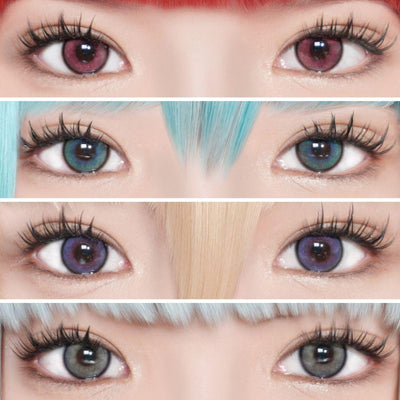
"How to remove contact lenses with long nails" is one of the highest-volume nail-adjacent searches in the EyeCandys keyword set. The honest answer is that you should not be removing contact lenses with long nails at all. Short nails make lens insertion and removal safer, faster, and less stressful. If you are already an EyeCandys lens customer, this is the matching product on the nail side of your routine.
Anyone Recovering from Acrylate Damage
If you have arrived at short nails by way of a gel or acrylic disaster from another brand, this is the bridge product. EyeCandys short press-ons paired with resin-based Insanely Sticky Tabs let you keep wearing nails through the 4 to 6 months of regrowth without compounding the original injury. The application system never reintroduces the uncured or semi-cured acrylate monomer that caused the damage in the first place.
Low-Maintenance by Choice
And the simplest case. If you want polished hands without weekly salon visits, biweekly fills, or 90-minute nights at home doing your own nails, short press-ons cover it. The full set goes on in under 10 minutes, holds 10 days on the resin tabs alone, removes in 10 to 15 minutes of warm soapy water, and reuses up to four times. Cost per wear lands around $6.50 versus around $80 for the equivalent salon set.
How EyeCandys Short Press-Ons Are Built Around the Data
EyeCandys short press-on nails are designed to sit in the 2 mm dermatology sweet spot, not push past it. That means lower torque on the distal seal, less subungual area for bacteria, and less mechanical pressure on the matrix.
The application system was built around the acrylate problem. EyeCandys Insanely Sticky Tabs are resin-based, not acrylate-based. Their adhesive is free of methyl methacrylate (MMA), 4-methoxyphenol (MEHQ), dibutyl phthalate, toluene, formaldehyde, formaldehyde resin, camphor, parabens, and xylene. There is no UV curing step, no fume exposure, and no uncured or semi-cured acrylate monomer touching your skin or nail plate. The tabs are rated safe to wear during pregnancy.
The Insanely Sticky Tabs hold for up to 10 days per wear on their own. The regular sticky tabs included in each press-on kit are designed for single events and hold for around 3 days. For longer wear (up to 3 weeks), the system accepts a small dot of cyanoacrylate nail glue applied to the press-on itself, never to the natural nail. Customers with diagnosed acrylate allergy should skip the glue method entirely and stick with the resin tabs.
Each EyeCandys press-on set is hand-buffed at the cuticle edge for a flush, no-lift fit, and tapered thinner at the base than the tip. That geometry distributes wear force toward the impact-resistant tip rather than the seal-vulnerable base. Sets are reusable up to four times when removed correctly using the soak-and-roll protocol described above, which brings the cost per wear to around $6.50.
Browse the full collection at /collections/press-on-nails.
Application and Removal at a Glance
Full step-by-step protocol ships in every kit and is on every product page. The headline rules are below.
- Prep with the included alcohol pad and let nails dry completely. Any oil or moisture left on the nail will shorten hold time.
- Lay out all 10 press-ons by size before applying anything. Between two sizes, go smaller for the cuticle-hugging fit.
- Apply the sticky tab first, leaving a 1 mm gap from the cuticle. The tab should never touch skin.
- Press the nail on at a 45-degree angle, base toward the cuticle first, then flat to the tip. Hold 20 to 30 seconds and push out any air bubbles.
- To remove, soak in warm soapy water for 10 to 15 minutes. Lift the side edges gently with the included cuticle stick, working inward. Never dry-pry from the cuticle.
Frequently Asked Questions
How long should my nails actually be?
Peer-reviewed research and dermatologist guidance converge on roughly 2 mm of free edge past the fingertip. That length protects the seal, maintains fingertip sensitivity, and keeps dexterity in the optimal range.
Are short press-ons more comfortable than long ones?
Yes, mechanically. Shorter free edges transmit less torque into the nail bed seal during normal use, which reduces the risk of lifting, snagging, and onycholysis. They also stay seated longer because there is less leverage to break the bond.
Will my nails recover from previous press-on damage?
Single-incident traumatic onycholysis typically grows out fully in 4 to 6 months at the normal 3 to 3.5 mm-per-month growth rate. Keep the affected nail short, skip nail products on the lifted area for at least 4 weeks, and apply cuticle oil to the surrounding skin only.
What makes EyeCandys Insanely Sticky Tabs different from regular nail glue?
They are resin-based instead of cyanoacrylate-based, with no methyl methacrylate, no MEHQ, no formaldehyde, and no UV curing step. That removes the primary triggers for (meth)acrylate contact allergy documented across dermatology patch-test literature.
Can I wear EyeCandys press-ons if I am pregnant or have an acrylate allergy?
The Insanely Sticky Tabs alone are rated safe during pregnancy and contain no acrylate monomer. If you have a diagnosed acrylate allergy, use the tabs only and skip the optional nail-glue method.
What is the safest way to remove press-ons?
Soak in warm soapy water for 10 to 15 minutes. Flood the seam with cuticle oil. Roll the press-on side to side from the free edge. Never pry from the cuticle. Pulling from the cuticle direction is what transmits force into the matrix and causes traumatic onycholysis.
Short by design. Healthier by chemistry.
Salon-gel press-ons in the 2 mm dermatology sweet spot, paired with resin-based Insanely Sticky Tabs. No methyl methacrylate. No UV curing. No fumes.