
Introduction
There’s a moment every cosplayer hits where the costume is technically correct, but the look still feels unfinished. Not because you missed a seam or chose the wrong fabric, but because it doesn’t feel like a full interpretation yet. It looks like an outfit. It doesn’t look like a character.
That gap is almost always solved with accessories. Not in the “add more stuff” way, but in the design sense. Accessories are the visual language that tells people who the character is, what world they belong to, and what version of them you’re choosing to embody. They’re also where you get to leave your fingerprints without breaking recognizability. When done well, accessories don’t compete with the cosplay. They give it a point of view.
This is a guide to doing that on purpose. To choosing finishing touches that make your cosplay feel cohesive, intentional, and unmistakably yours, even when you’re working with a simplified base outfit or a closet-friendly interpretation.
The Shift That Changes Everything: Interpretation Over Imitation
A lot of cosplayers get stuck because they think personalization means changing the character. But the best personal cosplay doesn’t change the character so much as it changes the lens. You’re still honoring the same visual DNA, you’re just choosing an angle.
That angle can be subtle, like a canon look that’s cleaner and more elevated. Or it can be dramatic, like a streetwear version, a runway version, a softer romantic version, or a villain-leaning interpretation that pushes the mood darker. The point is that your accessories should reinforce that lens. When they don’t, the look starts to feel random, like you’re wearing a costume and your accessories are wearing you.
If you want an easy gut-check before you start styling, try writing one sentence that describes your version. Not a paragraph. One sentence. It’s surprisingly hard if you’re not actually clear on your concept, and surprisingly easy once you are.
Why Accessories Matter More Than People Admit
In photos and video, accessories often do more work than the costume itself. A camera doesn’t read effort. It reads contrast, shape, and story. The details near your face, hands, and waist are what show up repeatedly: in close-ups, in prop shots, in transitions, in the way you move through a space. This is why a cosplay can be “accurate” and still feel flat on camera. It might be correct, but it isn’t composed.
Accessories solve that by creating visual punctuation. They add focal points. They provide a hierarchy: here’s where your eye should go first, here’s the motif that repeats, here’s the signature detail that makes the character instantly readable even when the outfit is simplified.
Keep The Character Readable, Then Take Creative Liberties
Personalization works best when you treat a character like a design system with a few non-negotiables. Every character has visual DNA: the palette that belongs to them, the silhouette you’d recognize from across the room, a symbol or emblem, the shape of their hair, the presence of a specific prop. You don’t have to keep all of it. You do need to keep enough of it.
Once you lock in two or three of those cues, you gain freedom everywhere else. This is where accessories become your creative playground. You can shift textures, elevate materials, change the styling era, sharpen or soften the mood, and still have the look read as that character because the brain catches the anchor points.
Eyes: The Fastest Way To Make An Interpretation Feel Intentional
If you want the single most impactful styling choice you can make, start with the eyes. Eyes are character. They’re emotion, power, intensity, softness, menace. In cosplay, they’re also one of the quickest ways to make the look feel “real,” especially in close-up photos where the costume details might not even be visible.
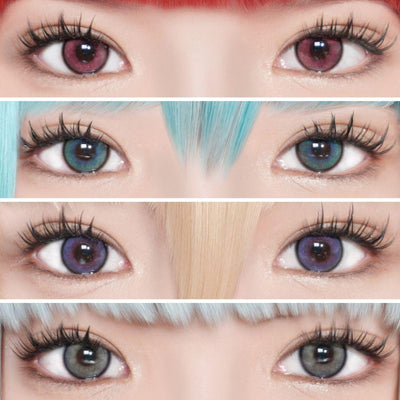
This is where colored contacts become more than a cosmetic choice. They can be an accuracy tool, but they can also be an interpretation tool. A brighter, higher-contrast eye can push a character toward anime intensity or fantasy drama. A softer, more natural enhancement can pull the look into a modern, wearable world. If your outfit is simplified, the eyes can carry the illusion. If your outfit is complex, the eyes can unify the mood so the whole look feels coherent rather than busy.
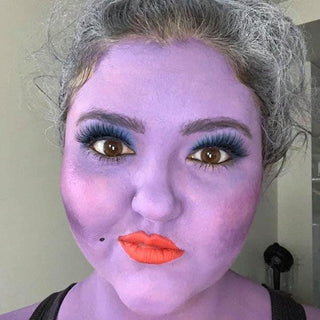
Makeup should follow that same logic. Instead of asking “what does this character’s makeup look like,” ask “what does my version of this character feel like.” Clean and polished reads as canon-plus. Graphic lines read as runway or villain. Diffused edges read as softer, romantic, or dreamy. This is how you make the face match the story your accessories are telling.
Hands and Nails: The Detail That Quietly Makes Everything Look Expensive
Cosplay hands are always in frame. You’re holding props, doing transitions, posing, gesturing, adjusting hair, interacting with other people. It’s why nails can elevate a cosplay in a way that’s difficult to explain until you see it side-by-side.
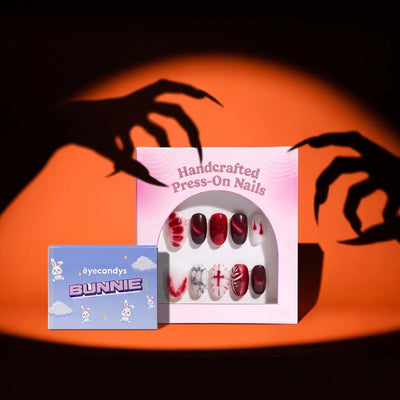
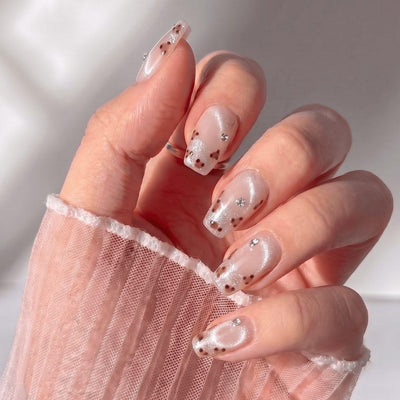
But nails don’t need to be literal. In fact, they’re often stronger when they’re emotional. Instead of matching the exact costume color, match the character’s energy. A clean neutral with a subtle motif can feel hero-coded and polished. A sharper silhouette and deeper tones can push villain energy. Shimmer can signal magic. Metallics can signal sci-fi. You don’t have to shout the reference. You just have to support the world.
The same goes for gloves and rings. They’re not just decorative; they imply what kind of person this character is. A tactical glove communicates readiness. A lace glove communicates elegance. A ring stack can signal status, vanity, ritual, or wealth depending on the shapes and finishes. If you want your cosplay to feel like a character lives in it, think about how their hands would look in their own life.
Hair Accessories: Where Identity Lives
Hair is one of the strongest recognition anchors in cosplay, which makes hair accessories especially powerful. The right clip, ribbon, headpiece, veil, crown, or visor can turn a “nice outfit” into “oh, I know exactly who that is,” even if the clothing itself is simple.
There’s also a practical truth here. Not everyone wants to build a perfect wig from scratch, and not every cosplay needs it. Small styling upgrades can do an enormous amount of heavy lifting: shaping the silhouette so it reads, cleaning up the part, adding intentional streaks or clip-ins, choosing one signature accessory that reinforces the character’s motif. When your hair tells the story, your outfit can relax.
If you’re working with closet cosplay or a simplified build, put your effort into the head and the hands. It’s the fastest path to a look that feels complete.
Jewelry: The Easiest Way To Add Backstory Without Adding Clutter
Jewelry is where you can make a character feel like a person rather than a costume. The right piece can imply a history. It can suggest status. It can hint at a relationship. It can make your version of the character feel lived-in.
This is also where personalization can be subtle and still meaningful. You don’t have to invent an entire alternate universe to make an accessory choice feel deliberate. You just need the piece to make sense in the world. Is the character practical or ornate. Are they sentimental or status-driven. Is their world industrial, magical, modern, ancient. Once you answer that, jewelry becomes less about “what looks cute” and more about “what belongs.”
And if you ever feel like you’re over-accessorizing, there’s an easy fix: let one piece be the statement and keep everything else quiet. You’ll look styled, not cluttered.
Waist Accessories: Structure Makes Cosplay Feel Designed
There’s a reason belts, harnesses, corsetry, sashes, and structured waist details show up constantly in high-performing cosplay photos. They create shape. They break up a silhouette. They make the outfit look intentional even when it’s made from simple pieces.
A waist detail can also carry story. Utility belts and straps suggest readiness and movement. Corsetry suggests drama, romance, power, or tradition depending on the shape and materials. Sashes can push fantasy or historical energy. Chains can push villain or gothic energy. It’s a styling choice that affects the entire look, not just one detail.
If you want your cosplay to feel elevated quickly, add structure at the waist and choose hardware that matches your character’s world.
Props: Not Just Accurate, But Narrative
A good prop does something most accessories can’t: it gives you a reason to move. It gives you something to do with your hands. It changes your posture. It creates story in photos without you needing to explain anything.
But props can also overwhelm a cosplay if they don’t match the tone. If your look is sleek and polished, a rough, messy prop can pull focus in the wrong way. If your look is gritty and worn, a too-perfect prop can look like it belongs to a different costume. The best approach is to treat your prop like part of the palette and finish system. It should match the world you’re building.
And if you only take one piece of advice here, let it be this: one signature prop is usually stronger than multiple small ones. Make it iconic. Make it readable. Make it a character in the frame.
How To Find Accessory Inspiration Without Spiraling
Accessory inspiration is where a lot of cosplayers get stuck, not because they don’t have taste, but because there are too many options. The antidote is not more scrolling. It’s constraints.
Instead of searching “cosplay accessories” endlessly, start with your one-sentence interpretation and ask what accessories naturally belong to that version of the character. If it’s runway, the accessories should feel editorial and intentional. If it’s streetwear, they should feel practical and styled. If it’s villain arc, they should sharpen the mood. If it’s soft, they should soften the palette and edges.
Then choose a small number of accessory categories to focus on. Eyes, hair, hands, waist, jewelry, prop. You don’t need all of them. You just need enough to create a composed look. When everything is a focal point, nothing is.
The Common Mistakes That Make Accessories Feel Accidental
The biggest mistake is mixing worlds without realizing it. Glossy next to distressed. Modern hardware next to fantasy silhouettes. A palette that drifts because each accessory was chosen independently. You can fix most of this by committing to one finish language and one metal choice, then making everything obey it.
Another mistake is adding accessories without protecting the character’s DNA. If your look is drifting into “inspired by,” bring back a clear symbol, a palette cue, or a silhouette anchor. You don’t need more accessories. You need one clearer signal.
And finally, discomfort will ruin even the prettiest look. If your shoes hurt, your prop is heavy, your headpiece slides, or your jewelry snags, it will show in your body language. Comfort is not separate from design. It’s part of making the character believable.
Conclusion
Accessories are where cosplay becomes yours. They’re the details that turn a costume into an interpretation, and an interpretation into a character that feels alive. The goal isn’t to add more. It’s to add meaning.
Start with your lens. Protect the character’s visual DNA. Choose finishing touches that match the world you’re building, and let one signature detail do the heavy lifting. When your eyes, hands, hair, and one iconic accessory all point to the same story, your cosplay doesn’t just look good. It looks like you meant it.