
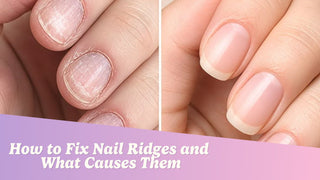
Nail Ridges Explained: What Causes Them and How to Smooth Them
Nail ridges have a way of becoming much more noticeable as soon as you apply polish. A glossy finish, sheer colour, or metallic shade can highlight every raised line and uneven area across the nail.
While you may want to file those ridges away immediately, not every ridge is simply a cosmetic problem. Fine vertical lines are common and may become more noticeable with age, dryness, or repeated nail damage. Deep horizontal grooves can develop when normal nail growth is temporarily interrupted.
The right way to address nail ridges depends on what they look like, how quickly they appeared, and whether you are experiencing other nail or skin changes.
Some ridges can be softened with moisturizing treatments, a ridge-filling base coat, and gentler manicure habits. Others need to grow out naturally or be evaluated by a healthcare professional.
Here is what causes ridges in fingernails, how to smooth their appearance safely, and what your nails may be telling you.
What Are Nail Ridges?
Nail ridges are raised or indented lines that form on the surface of the nail plate. They may appear on one nail, several nails, or all your fingernails and toenails.
The two main types are vertical and horizontal ridges.
Vertical ridges run from the cuticle toward the tip of the nail. These are also called longitudinal ridges.
Horizontal ridges travel from one side of the nail to the other. Deep horizontal grooves may be called Beau’s lines.
The direction, depth, and timing of the ridges can provide useful clues about their possible cause. Fine vertical lines that develop gradually are generally different from a deep horizontal groove that suddenly appears across several nails.
Nail ridges are not a diagnosis by themselves. Many different factors can affect nail growth and texture, so it is important to consider the entire nail rather than focusing on a single line.
Vertical vs. Horizontal Nail Ridges
Identifying the direction of your nail ridges is the first step toward understanding them.
What Are Vertical Nail Ridges?
Vertical nail ridges extend from the base of the nail toward the free edge.
Fine vertical ridges are common and often harmless. They can become more noticeable over time as nails grow more slowly, lose moisture, or become thinner and more brittle.
These ridges may also stand out after repeated exposure to water, cleaning products, acetone, or aggressive manicure techniques.
A few shallow vertical lines are generally less concerning than a sudden change in texture accompanied by pain, lifting, discolouration, or changes in the surrounding skin.
What Are Horizontal Nail Ridges?
Horizontal grooves run from side to side across the nail.
These grooves can develop when nail growth is temporarily slowed or interrupted. A horizontal ridge may appear after an illness, an injury to the nail, significant physical stress, or certain medical treatments.
The groove usually moves toward the tip as the nail grows. Because fingernails grow slowly, the event that caused the line may have occurred weeks or months before the ridge became noticeable.
A single horizontal groove on one nail may be related to a local injury. Deep horizontal lines appearing across several nails may deserve more attention because they can indicate that nail growth was interrupted throughout the body.
Pro Tip: Take a clear photo when you first notice a horizontal ridge. Comparing its position over several weeks can help you see whether it is moving outward as the nail grows.

What Causes Vertical Ridges in Fingernails?
Vertical nail ridges can develop for several reasons. In many cases, more than one factor may be contributing to the change.
Normal Changes With Age
Fine vertical ridges may become more noticeable as you get older.
Like hair and skin, nails can change with age. They may grow more slowly, hold less moisture, or become thinner and more brittle. These changes can make natural lines in the nail plate easier to see.
Age-related ridges are usually shallow and develop gradually. They are not typically painful and may affect several nails in a similar way.
While they cannot always be permanently removed, gentle nail care can help make them less noticeable.
Dry or Brittle Nails
Dryness can exaggerate the appearance of nail ridges.
Frequent handwashing, repeated use of hand sanitizer, cold weather, indoor heating, and regular exposure to cleaning products can remove moisture from the nails and surrounding skin.
Nails also absorb water. Repeatedly moving between wet and dry conditions can cause the nail plate to expand and contract, contributing to brittleness, peeling, and uneven texture.
Someone who washes dishes without gloves or works with their hands in water may notice more pronounced ridges and splitting.
Manicure Damage
Aggressive manicure techniques can damage the nail plate or the area where new nail growth begins.
Possible sources of damage include:
- Heavy buffing
- Electric filing on the natural nail
- Forceful cuticle pushing or cutting
- Picking or peeling gel polish
- Scraping away dip powder
- Pulling off acrylic or press-on nails
- Frequently changing enhancements without breaks
When the nail plate becomes thinner, its natural texture may appear more pronounced. Damage near the base of the nail can also affect the new growth that develops afterward.
The damaged section must grow toward the tip before it can be trimmed away, so nail texture may remain uneven for several months after an aggressive manicure.
Repeated Trauma to the Nail
Small, repeated injuries can affect the way a nail grows.
This may happen when you regularly pick at your cuticles, bite your nails, press on the base of the nail, or use your nails as tools.
Typing, crafting, playing an instrument, and working with tools do not automatically cause nail ridges. However, repeated pressure on the same area can contribute to changes in a vulnerable nail.
A ridge affecting only one nail may be connected to a habit or injury involving that particular finger.
Skin and Nail Conditions
Some skin conditions can change the texture, colour, thickness, or shape of the nails.
Nail psoriasis may cause pitting, roughness, crumbling, lifting, or discolouration. Eczema around the fingertips can affect the nail-forming area and contribute to ridges or uneven growth.
Other inflammatory nail conditions may create grooves, thinning, splitting, or a rough surface.
Ridges alone are not enough to identify a skin condition. If the nails are also painful, lifting, crumbling, or surrounded by irritated skin, a dermatologist can help determine the cause.
Underlying Health or Nutritional Issues
Nail changes can sometimes occur alongside nutritional deficiencies, thyroid conditions, kidney problems, certain medications, or other health concerns.
However, vertical ridges do not automatically mean you are deficient in iron, vitamins, or another nutrient.
Nail texture can be influenced by age, genetics, moisture, injury, health conditions, and manicure habits. Trying to diagnose a deficiency from nail ridges alone can lead to unnecessary supplements while overlooking the actual cause.
Persistent or sudden nail changes are worth discussing with a healthcare professional, particularly when you are experiencing fatigue, hair changes, skin symptoms, weight changes, or other concerns.
What Causes Horizontal Ridges in Nails?
Deep horizontal ridges may be known as Beau’s lines.
These grooves form when the area responsible for nail production temporarily slows down or stops growing normally. When growth resumes, the interruption may remain visible as an indented line across the nail.
Possible triggers include a significant illness, physical injury, major stress on the body, certain medications, medical treatments, or repeated trauma from manicures.
A horizontal groove may not appear immediately after the triggering event. Because the nail grows outward from its base, there can be a delay before the line becomes visible.
The position of the groove may provide a rough sense of when the interruption happened, but it cannot reliably identify the exact cause.
A single line on one nail may follow an injury to that finger. Similar lines across several nails may suggest a wider interruption in nail growth and should be discussed with a healthcare professional, especially when the change is unexplained.
Can You Get Rid of Nail Ridges?
Existing nail ridges usually need to grow out.
A nail treatment cannot permanently erase a deep groove that is already part of the nail plate. You can smooth its appearance temporarily, but the affected section must move toward the tip and eventually be trimmed away.
Fine vertical ridges related to normal nail structure or aging may continue to develop. Regular moisturizing and gentle grooming can make them less obvious, but they may not disappear completely.
Horizontal ridges may gradually move toward the free edge as healthy nail growth continues. Once the grooved section reaches the end, it can be carefully clipped or filed away.
The safest approach is to support healthy new growth rather than aggressively removing layers from the existing nail.
How to Smooth Nail Ridges Safely
You do not need to grind the nail completely flat to create a smoother-looking manicure. A few gentle techniques can improve the appearance of ridges while protecting the natural nail.
Moisturize Your Nails and Cuticles
Apply cuticle oil, hand cream, or a fragrance-free moisturizer to the nails and surrounding skin regularly.
Moisturizing is especially helpful after washing your hands, removing nail polish, or using acetone. Massage the product around the cuticles and across the nail surface.
Moisturizer cannot remove a deep groove, but it can improve flexibility and make dry, brittle texture look less pronounced.
Keeping the skin around the nail moisturized may also reduce the temptation to pick at dry cuticles or hangnails.
Use a Ridge-Filling Base Coat
A ridge-filling base coat is one of the easiest ways to create a smoother manicure without removing layers from the nail plate.
These base coats are slightly thicker than standard formulas. They settle into shallow lines and create a more even foundation for colour.
Apply a thin, even layer and allow it to dry completely. A second coat may be used if the product instructions recommend it, but piling on several thick coats can lead to bubbling, uneven drying, or early peeling.
A ridge filler is a cosmetic solution. It makes the surface appear smoother but does not treat an underlying health condition or permanently change the nail.
Buff Very Lightly
Minor surface texture may be gently softened with a fine nail buffer.
Use minimal pressure and only a few light passes over the raised area. The goal is to soften a rough edge, not completely flatten the nail.
Buffing removes part of the nail plate. Frequent or aggressive buffing can leave the nails thinner, more flexible, and more likely to peel or break.
Deep ridges should not be filed away. Trying to level the surrounding nail with the bottom of a groove may remove too much healthy nail tissue.
Pro Tip: If your nail feels thinner or warm while you are buffing, stop. Nail preparation should never feel painful or uncomfortable.
Keep Your Nails at a Practical Length
Shorter nails experience less leverage during everyday activities.
Typing, cleaning, lifting objects, opening packages, and catching a nail on fabric can place pressure on weak or ridged areas. Keeping the nails slightly shorter may help prevent cracks from forming along those lines.
Use a fine-grit file to smooth the edges. Rounded, oval, and squoval shapes may catch less often than sharp square corners.
Wear Gloves During Wet or Messy Tasks
Wear gloves while washing dishes, cleaning, gardening, or working with household chemicals.
This helps limit repeated water exposure and protects the nails from impacts, dirt, and harsh ingredients.
Make sure the inside of the gloves remains dry. Wearing damp gloves for an extended period can keep the nails and skin exposed to unwanted moisture.
Take a Break From Aggressive Manicures
Nails that are thin, tender, peeling, or heavily ridged may benefit from a break from enhancements that require filing, strong adhesives, or repeated acetone removal.
This does not necessarily mean you must avoid nail colour altogether. A gentle base coat and traditional polish may be less demanding than a thick enhancement while the damaged nail grows out.
Pay attention to how your nails look and feel after removal. Tenderness, redness, burning, or significant thinning are signs that the nails may need time to recover.

Can Nail Polish Hide Ridges?
Nail polish can hide ridges, but certain formulas may highlight them instead.
Metallic, chrome, pearlescent, sheer, and very glossy polishes reflect light across the nail. This can make every raised line and groove more noticeable.
Start with a ridge-filling base coat to create a more even surface. Opaque cream colours, soft glitters, and nail art patterns may also disguise texture better than a thin, reflective shade.
Apply polish in thin layers. Thick coats can settle unevenly, take longer to dry, and peel away sooner.
A smooth top coat may improve the final appearance, but it should not be used to bury a deep ridge beneath multiple heavy layers.
Nano Banana prompt: Overhead flat lay on a cream surface of three bottles of opaque cream nail polish in soft rose, periwinkle and nude, beside a small row of nail art swatch tips showing a polka dot pattern and fine pinstripes, soft natural daylight, gentle shadows, matte cream finishes rather than chrome, rose and cream tones, photorealistic, high resolution, no text. Negative prompt: text, watermark, logo, dark background, harsh lighting, cluttered, blurry, low quality, chrome, metallic, holographic, hands, fingers Alt text: Opaque cream nail polishes and patterned nail swatches that help hide nail ridges Caption: (none) Filename: how-to-fix-nail-ridges-opaque-polish.jpg

Can You Wear Press-On Nails Over Ridged Nails?
Press-on nails may provide temporary cosmetic coverage when the natural nails are healthy, comfortable, and free from infection or unexplained lifting.
You do not need to aggressively buff away every ridge before applying press-ons. Lightly cleansing the surface and following the application instructions may provide enough preparation.
Excessive buffing can weaken an already ridged nail and may not significantly improve wear time.
Choose short or medium-length press-ons if your natural nails are thin or fragile. Longer nails create more leverage and may place additional pressure on the natural nail if they are bumped.
Do not apply press-ons over broken skin, inflamed cuticles, painful nails, active irritation, major discolouration, or nails that are separating from the nail bed.
Remove them gently according to the product instructions. Pulling or prying them off can remove layers of the natural nail and make existing ridges more noticeable.
EyeCandys Product Callout: Explore EyeCandys press-on nail designs for an easy way to change your manicure while keeping application and removal gentle.
Do Vitamins Fix Nail Ridges?
Vitamins and supplements do not automatically fix nail ridges.
Nutritional deficiencies can affect nail growth in some cases, but ridges have many possible causes. You cannot reliably determine that you are low in iron, biotin, zinc, or another nutrient based on nail texture alone.
Most people should focus on eating a balanced diet that includes adequate protein, vegetables, fruit, healthy fats, and a range of vitamins and minerals.
Speak with a healthcare professional before starting a supplement specifically for nail ridges. They can consider your medical history, diet, medications, and any additional symptoms before deciding whether testing is appropriate.
High-dose biotin is often marketed for hair and nail growth, but it is not a universal treatment for ridges. It may also interfere with certain medical laboratory tests.
A supplement is unlikely to change damage caused by picking, over-filing, or improper manicure removal. Those issues are better addressed by changing the nail-care habit and allowing healthier growth to replace the damaged section.
What Not to Do About Nail Ridges
The desire for instantly smooth nails can lead to techniques that make the problem worse.
Do Not Buff Ridges Aggressively
Trying to grind a deep ridge completely flat can significantly thin the nail surrounding it.
The nail may look smoother temporarily but become weaker, more flexible, and more likely to split.
Do Not Peel Off Nail Products
Peeling off gel polish, dip powder, acrylic, or press-on nails may remove layers from the natural nail plate.
This can leave the surface rough, thin, and uneven, making ridges more noticeable.
Do Not Cover Unexplained Changes Indefinitely
Polish and press-on nails can temporarily disguise texture, but they should not replace an evaluation when the change is sudden or unusual.
Remove your manicure periodically so you can inspect the natural nail.
Do Not Diagnose a Deficiency From Your Nails
Nail ridges alone cannot confirm low iron, vitamin deficiency, thyroid disease, or another health condition.
Avoid starting supplements or restrictive diets based solely on how your nails look.
Do Not Cut or Push the Cuticles Aggressively
The cuticle helps protect the area where the nail grows.
Aggressive cutting, scraping, or pushing can injure the skin and potentially affect the developing nail. Keep cuticle care gentle and stop if you experience pain or bleeding.
When Should You See a Healthcare Professional?
Many fine vertical ridges are harmless, but sudden or significant changes deserve attention.
Consider speaking with a healthcare professional when the ridges:
- Appear suddenly
- Become deeper or continue worsening
- Run horizontally across several nails
- Affect one nail for an extended period without a clear injury
- Develop with pain, redness, warmth, or swelling
- Appear with nail lifting, crumbling, thickening, or discolouration
- Occur alongside changes elsewhere on the skin or body
Nail fungus can cause thickening, crumbling, discolouration, or lifting. Inflammatory skin conditions may create pitting, grooves, roughness, or changes around the cuticle.
Because these conditions require different treatments, covering the nail without identifying the cause may delay appropriate care.
A new brown or black band should not be assumed to be an ordinary ridge or bruise. Darkening that does not grow out, colour spreading onto the surrounding skin, splitting, or a bump beneath the nail should be examined promptly.
You should also seek care when a nail change follows a significant injury, the nail begins separating from the skin, or you notice drainage or signs of infection.
How Long Does It Take Nail Ridges to Grow Out?
Nail changes take time to improve because the damaged section must grow from the base to the tip.
Fingernails often require several months to grow out completely. Toenails grow more slowly and may take a year or longer to replace.
The exact timeline varies based on age, health, circulation, season, the nail involved, and how much of the nail was affected.
A treatment that improves dryness may make the nail look better relatively quickly, but a deep groove or damaged section will not disappear overnight.
Track gradual progress by taking photos every few weeks. Look for smoother growth emerging near the cuticle rather than expecting the existing ridge to vanish.
Once the damaged area reaches the free edge, it can be trimmed or gently filed away.

Nail Ridges Are Common, but Changes Matter
Fine vertical nail ridges are common and may become more noticeable with age, dryness, or repeated exposure to water and manicure products.
Horizontal ridges, sudden texture changes, or grooves that appear with pain, lifting, thickening, or discolouration deserve closer attention.
The safest way to improve the appearance of ridged nails is to moisturize regularly, protect your hands from water and cleaning products, use a ridge-filling base coat, and avoid excessive buffing.
Be patient with the growth process. Healthy nail changes begin near the cuticle and may take several months to reach the tip.
Once your natural nails are healthy and comfortable, explore EyeCandys press-on nail styles for an easy manicure refresh without aggressively filing away their natural texture.


An Easy Manicure Refresh
Explore EyeCandys press-on nail designs for an easy way to change your manicure while keeping application and removal gentle.