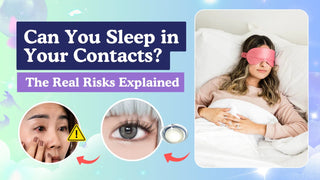
Can You Sleep in Your Contacts? Let’s Talk About It
Introduction
We've all been there. It’s late, you’re curled up in bed after a long day, and the last thing you want to do is peel yourself off the pillow to take out your contacts. Or maybe you’ve drifted off on the couch mid-movie without realizing you're still wearing them. So the question comes up: Is itreally that bad to sleep in your contacts?
The short answer? It can be. While it may not cause immediate harm in a single instance, regularly sleeping in your lenses—especially if they’re not approved for overnight wear—can put your eye health at serious risk. In this guide, we’ll break down what happens to your eyes when you fall asleep with your contacts in, the real risks you should know about, and what to do if it happens.
What Happens When You Sleep in Contacts?
To understand why sleeping in contacts can be harmful, it helps to know what your eyes need to stay healthy. Your cornea (the clear front part of your eye) gets oxygen directly from the air—not from blood vessels like most other body parts. When you're awake and blinking, this oxygen exchange is steady. But contact lenses—especially thicker or older types—create a barrier that reduces oxygen flow.
When you close your eyes during sleep, oxygen supply to your eyes drops even further. Add a contact lens into the mix, and you're creating a low-oxygen environment on your eye’s surface. That’s a recipe for trouble.
The Real Risks of Sleeping in Contact Lenses
Falling asleep in your lenses once might not leave you with permanent damage, but repeated or prolonged wear can absolutely impact your eye health. Here's what could happen:
Corneal Hypoxia
Hypoxia occurs when your cornea doesn’t get enough oxygen. It can cause swelling, blurry vision, discomfort, and an increased risk of infection. In some cases, it can even change the shape of your cornea.
Increased Risk of Infections
When your eyes are closed and covered by a lens, your tear film (which helps clear debris and bacteria) doesn’t circulate as effectively. This creates the perfect environment for harmful microbes to multiply. The most serious infection is microbial keratitis—a painful condition that can cause permanent vision loss if untreated.
Corneal Ulcers
Sleeping in lenses increases your risk of developing ulcers on the cornea. These are open sores that can be very painful and require immediate medical attention. They can also cause scarring, which may affect your vision long term.
Eye Irritation and Redness
Even if infection doesn’t set in, sleeping in contacts can leave your eyes feeling dry, itchy, and red when you wake up. Chronic irritation can make wearing lenses more uncomfortable in general.
Are There Contacts That Are Safe for Sleeping?
Yes—but with a big asterisk.
There are specialty lenses made from silicone hydrogel materials that are FDA-approved for extended or overnight wear. These lenses are more breathable and allow significantly more oxygen to reach the cornea. However, even these “sleep-approved” lenses carry a higher risk of complications than daily removal.
Sleeping in lenses—any lenses—should only be done under the supervision of an eye care professional. Regular checkups and strict hygiene are non-negotiable if you go this route.
So while extended-wear lenses exist, the safest practice is still to remove your lenses before bed. Always.
Oops—You Slept in Your Contacts. What Now?
First, don’t panic. Many people do this at least once. But how you handle it next matters.
Here’s what to do if you fall asleep in your lenses:
-
Remove them as soon as you wake up, but don’t yank them out.
-
If your eyes feel dry or the lenses seem stuck, use rewetting drops and blink a few times before removal.
-
Avoid rubbing your eyes, as this could irritate or scratch the cornea.
-
Watch for symptoms: redness, light sensitivity, blurred vision, or pain.
-
If any of these occur, call your eye doctor immediately—especially if symptoms worsen over time.
Even if you feel fine, give your eyes a break by going glasses-only for the rest of the day.
How to Prevent It from Happening Again
Life gets busy, and bedtime routines don’t always go according to plan. But your eye health is worth the effort. Here’s how to make contact removal part of your nightly habits:
-
Create a ritual. Pair contact removal with brushing your teeth or skincare so it becomes automatic.
-
Keep a lens case and solution by your bed just in case you’re too tired to make it to the bathroom.
-
Try daily disposables. These are removed and tossed every night—no cleaning or storing required.
-
Set a phone reminder or use a smart assistant to nudge you if you often forget.
-
And most importantly, get regular eye exams to ensure your lenses are the right fit and type for your lifestyle.
Pro Tips from the EyeCandys Community
At EyeCandys, we believe comfort and safety should go hand-in-hand. Many of our customers love our breathable, high-moisture lenses for their all-day wearability—but we always emphasize: no matter how comfortable they are, they are not made for sleeping.
Need a backup pair of glasses? Want to try daily lenses for more flexibility? We’ve got options to fit every routine.
And remember: if your eyes ever feel irritated or your vision suddenly changes, take your lenses out and consult a professional. Fast action can prevent long-term issues.
So… Can You Sleep in Your Contacts?
If you’ve read this far, you already know the answer: you can—but you really shouldn’t. The risks to your eye health simply aren’t worth it, especially when it’s so easy to avoid.
Even if it’s a rare accident, understanding what happens to your eyes and what to do next can save you a lot of discomfort—and possibly your vision.
Take care of your eyes the same way you take care of the rest of your body: with attention, consistency, and good habits.
Want lenses that feel amazing all day (while you’re awake)? Check out our full range of stylish, breathable contact lenses and lens care essentials!