
Healthy nails are one of those things you only notice when they’re not doing well. Peeling layers, splits that keep catching on sweaters, rough cuticles that won’t calm down, or nails that suddenly feel paper-thin can make even the prettiest manicure feel like a temporary bandage. The good news is that nail health is usually less about one miracle product and more about a handful of consistent habits: protecting nails from daily trauma, keeping them hydrated, and being gentler with prep and removal.
This guide is evergreen and practical. It covers the basics of what nails need to stay strong, how to care for cuticles without damage, what to know about supplements, and how to keep doing your nails in a low-stress way. It also includes a quick “when to see a professional” section for changes that shouldn’t be ignored.
Nail Health Basics
What nails are made of and why that matters
Your nails are made primarily of keratin, the same protein found in hair. The nail plate is built in layers, and those layers can separate when nails are dehydrated, repeatedly soaked, or physically stressed. That’s why peeling often shows up after a season of lots of handwashing, frequent polish removal, or using nails as tools.
Nails also grow from the matrix (under the skin at the base of the nail). If the matrix is healthy, nails tend to grow more smoothly. If nails are constantly traumatized (biting, picking, harsh prep), you can end up with more breakage and uneven texture over time.
What “healthy nails” typically look like
Healthy nails aren’t perfect, glassy, or completely ridge-free. They’re usually:
Even in color (not counting polish staining)
Smooth enough that polish lays nicely
Flexible but not bendy or flimsy
Not consistently peeling, splitting, or painful
A few faint vertical ridges can be normal, especially as you age. The bigger concern is sudden changes in color, shape, thickness, or pain. Mayo Clinic lists several nail changes that warrant medical attention, including a new dark streak, nail lifting, bleeding, swelling, or pain. (Mayo Clinic)
How fast nails grow
Nails grow slowly, which is why nail health improvements can feel delayed. A commonly cited average is about 3.47 mm per month for fingernails, and it can take roughly six months for a fingernail to fully grow out from base to tip. (Health)
That timeline is helpful to remember when you’re trying to repair peeling or breakage. Consistency beats intensity.
Daily Habits That Make Nails Stronger
Hydration is non-negotiable
If you do one thing for nail health, make it moisturizing your hands, nails, and cuticles more often than you think you need to. Dermatologists regularly recommend moisturizing nails and cuticles as part of basic nail care. (American Academy of Dermatology)
A simple rhythm that tends to work:
After washing hands, apply hand cream and pull a little over your nails and cuticles
At night, do a slightly heavier layer (cream or ointment texture) and massage it in
If your cuticles are chronically dry, add a cuticle oil step before bed
This is less about luxury and more about preventing the nail plate from becoming brittle and splitting.
Protect nails from water overload
It’s counterintuitive, but too much water can be rough on nails. Nails absorb water, swell, and then dry out again, and repeated cycles can contribute to splitting and peeling. Mayo Clinic specifically calls out repeated or long contact with water as a factor in split nails and recommends wearing cotton-lined rubber gloves for dishwashing, cleaning, or chemical use. (Mayo Clinic)
If your nails peel every winter or every time you deep-clean your kitchen, gloves might be the biggest upgrade you make all year.
Use nails less like tools
This sounds obvious, but it’s one of the most common reasons nails break:
Popping open cans
Scraping off labels
Prying up small objects
Typing with the tips of long nails
Picking at polish or stickers
Nails do best when they’re treated like they’re delicate, because they are. Aim to use the pads of your fingers whenever you can.
Gentle filing and shaping
Shaping your nails regularly prevents snags, which prevents tears. The American Academy of Dermatology recommends keeping nails shaped and free of snags by filing with an emery board. (American Academy of Dermatology)
Two nail-health-friendly shaping rules:
File to smooth, not to “saw” the nail into place
Choose shapes that distribute stress (soft square, oval, squoval) rather than very sharp corners, which can catch and split
If you love a crisp shape, you can still keep it. Just make sure the edges are sealed and smooth.
Cuticle Care Without Damage
What cuticles do
The cuticle area is not just aesthetic. It acts like a protective seal between the nail plate and the skin, helping keep irritants and microbes out. That’s why aggressive cuticle cutting can backfire: it can create tiny openings that make irritation and infection more likely.
AAD’s nail-care guidance includes “do not remove the cuticle” as one of its core tips. (American Academy of Dermatology)
Better than cutting: soften and gently push back
If you like a neat cuticle line, focus on softening and tidying rather than cutting. After a shower (or after washing hands), cuticles are naturally softer. A gentle pushback (no digging, no scraping) plus hydration is usually enough for a clean look.
If you do trim, keep it conservative: only snip actual hangnails or clearly lifted bits of dead skin, not the living cuticle.
Hangnails: prevention and what to do if you get one
Hangnails are usually a dryness issue plus friction. Prevention is mostly moisturizing and avoiding picking.
If you get one: clip it, don’t rip it. Ripping can tear deeper than you intend and trigger swelling or tenderness. If the area becomes increasingly painful, red, or warm, treat it as a possible infection and get medical guidance.
Nutrition and Nail Health
Protein and overall diet
Because nails are made of keratin, your overall nutrition matters. Nails are often one of the first places you notice when your body is stressed, under-fueled, or depleted. This doesn’t mean every ridge is a deficiency, but it does mean a balanced, protein-forward diet supports the building blocks nails use.
If nails are suddenly very brittle or you’re seeing changes alongside other symptoms (fatigue, hair shedding, skin changes), it’s worth talking to a healthcare provider to rule out underlying causes.
Biotin and supplements
Biotin is the most talked-about “nail vitamin,” and there is some evidence it may help in certain cases of brittle nails, but the overall evidence base is limited and not a universal recommendation. A dermatology review in JAAD notes biotin supplementation is likely unnecessary for most people. (JAAD)
There are also publications suggesting improvement in brittle nails in some studies and reports. (Taylor & Francis Online)
The practical takeaway:
If you’re generally healthy and eating well, biotin may not be necessary
If a clinician has identified brittle nail syndrome or deficiency risk, supplementation might be considered
If you take biotin, you should tell your healthcare provider before lab work
One important safety note: the FDA has warned that biotin can interfere with certain lab tests, including troponin assays used in evaluating possible heart attacks. (U.S. Food and Drug Administration)
Hydration from the inside
Hydration won’t instantly “fix” nails, but chronic dehydration can show up as overall dryness: skin, cuticles, and nails included. If you’re moisturizing consistently and still struggling, consider whether your daily water intake and environmental factors (cold weather, indoor heat) are part of the picture.
Manicure and Polish Habits That Support Nail Health
Prep without over-buffing
Buffing feels satisfying, but too much thinning can make nails weaker and more prone to splitting. If you’re prepping for polish or stickers, aim for the minimum needed for adhesion. Healthy prep should look like lightly smoothing the surface, not sanding it down.
Give nails “rest” strategically
Some people thrive with constant polish, some do better with short breaks. A nail “rest” doesn’t have to mean bare nails for weeks. It can mean:
A few days between removal and reapplication
A week every month where you focus on hydration and cuticle care
Switching to lower-impact options during high-dryness seasons
Removal matters more than polish
Peeling polish off is one of the fastest ways to peel layers of nail with it. If nails are currently thin or flaky, treat removal like nail rehab: slow, gentle, and followed by hydration.
Mayo Clinic’s guidance includes simple protective habits like keeping nails dry and clean and using moisturizer on nails and cuticles. (Mayo Clinic)
Those habits matter most right after removal, when nails are more vulnerable.
Gel and acrylic caution notes
If you wear gel often, nail weakness usually comes from the cycle: prep, acetone soaking, and mechanical removal. Dermatologists also advise protecting skin from UV exposure during gel curing. AAD recommends applying broad-spectrum, water-resistant sunscreen SPF 30+ to hands (or wearing dark, opaque fingerless gloves) before gel manicures because curing lamps emit ultraviolet radiation. (American Academy of Dermatology)
If gel is part of your routine, “healthier” often means less frequent wear, gentler removal, and better UV precautions.
Common Nail Problems and What They Usually Mean
Peeling and splitting
Most often: repeated wet-dry cycles, frequent removal, dehydration, or trauma.
Support plan: gloves for wet work, moisturizing daily, gentler removal, shorter nail length while nails recover.
Brittle nails
Often linked to dryness, harsh chemicals, and overuse of strengthening products that can be too rigid. Mayo Clinic notes repeated/long water exposure can contribute to splitting, and gloves can help. (Mayo Clinic)
If brittleness is sudden or severe, consider checking in with a clinician.
Ridges
Mild vertical ridges can be normal and common. If ridges are new, worsening, or paired with other changes, it’s worth paying attention. If you’re smoothing ridges cosmetically, keep buffing minimal to avoid thinning.
Discoloration
Polish staining happens, especially with deeper colors. That’s usually cosmetic. More concerning discoloration includes a new or changing dark streak, which AAD notes should be examined by a dermatologist because it can be a sign of melanoma. (American Academy of Dermatology)
Fungal infections and what to watch for
Nail fungus can cause thickening, discoloration (yellow, white, brown), crumbling, and sometimes lifting of the nail. (American Academy of Dermatology)
Mayo Clinic notes it’s a good idea to see a healthcare provider if self-care hasn’t helped and the nail becomes increasingly discolored, thickened, or misshapen, and especially if you have swelling or pain around the nails. (Mayo Clinic)
Clean, Low-Stress Ways to Still Have Cute Nails
Lower-impact manicure options
If your goal is stronger nails, the best manicure is the one that reduces your “damage budget.” That can look like:
Shorter wear cycles so removal is easier
Skipping heavy buffing and aggressive cuticle work
Choosing finishes that look polished without requiring intense prep
Prioritizing hydration between sets
Nail stickers as a nail-friendly option
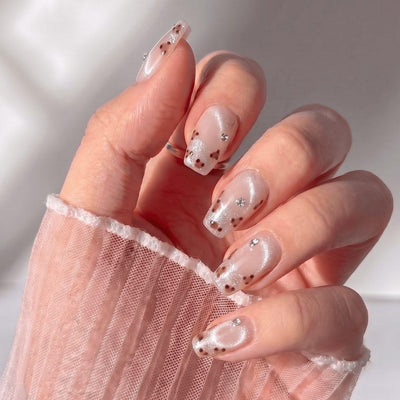
If you want your nails to look finished while you’re focusing on health, nail stickers can be an excellent middle ground. They’re tidy, fast, and often require less mess and less intensive removal than some traditional options. For many people, they also help reduce the temptation to pick at polish, because the look is immediately clean and uniform.
When to See a Professional
Symptoms that should get checked
If something feels truly “off,” don’t DIY it indefinitely. Mayo Clinic advises seeking medical guidance for changes like a new dark streak, nail lifting, bleeding, swelling or pain around the nails, and failure of nails to grow. (Mayo Clinic)
AAD also highlights that a new or changing dark streak under a nail should be evaluated by a dermatologist. (American Academy of Dermatology)
Who to see
A dermatologist is often the best specialist for nail concerns, especially discoloration, nail lifting, persistent pain, suspected fungus, or chronic inflammation around the nail. If the issue is clearly an infection or linked to broader symptoms, primary care can also help guide next steps.
Conclusion
Healthy nails don’t come from one perfect product. They come from small, consistent choices: moisturize your nails and cuticles daily, protect your hands during wet work, file gently to prevent snags, avoid aggressive cuticle cutting, and treat removal like part of your nail-care routine, not an afterthought. Dermatology guidance also supports simple habits like keeping nails clean and dry, shaping them to prevent breaks, and moisturizing regularly.