
Frankie Stein is one of the most recognizable students to walk the halls of Monster High.
Their black-and-white hair, mismatched eyes, visible stitches, electric accessories, and patchwork fashion create a character design that feels familiar even when the outfit changes. Frankie can be recreated through a relatively simple school-inspired costume, but the character also offers plenty of room for custom sewing, body paint, lightweight prosthetics, dramatic makeup, and high-fashion reinterpretations.
The first decision is which version of Frankie you want to portray.
The original, or Generation 1, Frankie uses she/her pronouns and is usually depicted with pale mint-green skin, long black-and-white hair, neck bolts, stitched limbs, mismatched blue and green eyes, and a preppy plaid outfit.
The current Generation 3 Frankie is nonbinary and uses they/them pronouns. This version generally has light cyan-blue skin, black-and-white hair with blue accents, mismatched eyes, visible stitches, lightning motifs, and a silver prosthetic leg. Their wardrobe changes across doll collections and episodes, but it frequently combines preppy clothing, patchwork construction, chunky footwear, and electric accessories.
Both designs are unmistakably Frankie Stein, but combining every detail from both generations can make the costume feel visually confused. Choose a clear reference before selecting the wig, skin color, contacts, outfit, and accessories.
Understanding the World of Monster High
Monster High is a fashion-doll and storytelling franchise centered on teenage children and relatives of legendary monsters.
The students draw inspiration from figures such as Dracula, Frankenstein’s monster, the Wolf Man, mummies, sea creatures, ghosts, and other familiar horror traditions. Instead of hiding those differences, the characters turn their fangs, fur, stitches, scales, and supernatural traits into personal style.
Mattel introduced Monster High in 2010, and individuality and belonging have remained central to the brand. Its current messaging emphasizes that students with “claws, fangs, stitches, or fur” all belong in the halls of Monster High.
That perspective is important when portraying Frankie.
Frankie is not designed as a frightening recreation of Frankenstein’s monster. They are a teenage character learning how to form friendships, navigate school, understand the world, and turn their unusual construction into something fashionable.
The monster references remain visible, but they are filtered through plaid skirts, platform shoes, statement earrings, school uniforms, handbags, and experimental fashion.
A successful Frankie cosplay should therefore balance two ideas: a stitched-together electric monster and an enthusiastic student developing a personal sense of style.
Who Is Frankie Stein?
Frankie is a frankenmonster whose body has been assembled from different parts and brought to life through electricity.
In the original continuity, Frankie is extremely new to the world when she begins attending Monster High. She is friendly, curious, optimistic, and occasionally naïve because she has not had much time to understand social rules. Her eagerness to learn and connect with other students makes her a natural entry point into the school’s unusual universe.
The Generation 3 version preserves that curiosity while reimagining Frankie as a nonbinary student made from the body parts and knowledge of multiple people. They are intelligent, enthusiastic, highly literal at times, and still learning the nuances of friendship and monster society.
Frankie’s personality should influence the cosplay performance.
They are energetic and excitable, not slow-moving like a traditional cinematic monster. Their curiosity often appears through wide-eyed expressions, quick reactions, and an eagerness to understand whatever is happening around them.
The character can be slightly awkward without becoming emotionless. A bright smile, surprised expression, sudden idea, or enthusiastic pose will usually feel more accurate than a constant blank stare.
Why Frankie’s Character Design Works
Frankie’s design uses visual contrasts that immediately communicate the character’s origin.
Their hair is divided into black and white sections. Their eyes are different colors. Visible stitches divide the face and body, while plaid patterns, patchwork clothing, and asymmetric accessories continue the idea of separate pieces joined together.
Lightning bolts and metallic hardware reference the electricity that gives Frankie life. School-uniform details keep the design connected to Monster High rather than allowing it to become a general Frankenstein costume.
The character’s color palette also balances the supernatural and fashionable.
Black, white, blue, green, silver, and plaid create the foundation. Pink, yellow, red, or other bright accents can then appear in accessories, makeup, ties, earrings, and shoes.
When planning the costume, repeat a few motifs rather than adding every possible monster detail. Stitches, lightning, asymmetry, plaid, and metallic accents will usually communicate Frankie more effectively than unrelated Halloween decorations.
Choosing Your Frankie Stein Version
Classic Generation 1 Frankie
Classic Frankie is the strongest choice for fans of the original dolls, webisodes, films, and early Monster High aesthetic.
This version is generally recognized by pale mint-green skin, very long white hair with bold black streaks, blue and green heterochromia, visible stitches, and metal neck bolts.
Her original school outfit includes a white and black upper section, a blue-green plaid skirt or dress, fishnet details, a black tie, metallic accessories, and platform-style shoes. The overall effect is a monster-inspired version of a preppy school uniform.
The silhouette is slim, highly stylized, and slightly asymmetrical.
Choose this version when you want a strong early-2010s Monster High look, long hair, mint skin, and the familiar plaid school outfit.
Generation 3 Frankie
Generation 3 Frankie uses a brighter, more contemporary approach.
This version has light cyan skin, black-and-white hair often mixed with blue streaks, blue and green eyes, visible facial and body stitches, lightning-bolt accessories, and a silver prosthetic left leg. Frankie is nonbinary in this continuity and uses they/them pronouns.
There is not one permanent G3 outfit.
Current doll collections regularly place Frankie in new combinations of patchwork denim, plaid, cropped sweaters, black skirts, stitched shorts, jackets, combat boots, metallic accessories, and lightning-bolt jewelry. Mattel’s official Frankie products continue to describe their fashion through electricity, stitched construction, patchwork clothing, and bold accessories.
That variation gives cosplayers more flexibility.
A G3 costume does not need to duplicate one doll exactly, but it should preserve the cyan skin, black-white-blue hair, stitches, heterochromia, prosthetic leg, and electric fashion language.
Collector and Haunt Couture Frankie
Collector Frankie dolls often reinterpret the character through dramatic fashion.
These versions may use layered tulle, deconstructed gowns, metallic chains, runway silhouettes, elaborate masks, or more detailed hair styling. Mattel’s Stitched in Style Frankie, for example, uses a dressmaking theme with visible topstitching, layered asymmetric fabric, and sewing-inspired silver chains. The Midnight Runway version emphasizes lightning-bolt details and high-fashion styling.
A collector-inspired cosplay works well for competitions, fashion editorials, and formal convention events.
The outfit can become more elaborate, but it should retain Frankie’s key visual vocabulary: black and white hair, visible seams, electric motifs, metallic hardware, and an intentionally pieced-together design.
Original Frankie-Inspired Fashion
Frankie’s design is flexible enough for an original interpretation.
Possible directions include a punk Frankie, prom Frankie, gothic-lolita Frankie, casual student Frankie, cyberpunk Frankie, formal Frankie, or everyday streetwear version.
An original costume should still feel connected to the character.
Repeat plaid, stitching, lightning bolts, mismatched jewelry, black and white hair, blue and green eyes, and metallic hardware. Without those anchors, the design may appear to be general monster fashion rather than Frankie Stein.
Building a Beginner Frankie Stein Costume
A beginner costume can begin with accessible school-inspired clothing.
For a classic version, combine a white collared shirt with a blue-green plaid skirt, black tie, black belt, fishnet sleeves or tights, and dark platform shoes.
For a simplified G3 version, use a white shirt, black skirt or shorts, plaid or patchwork layer, cropped jacket, chunky black boots, and lightning-bolt accessories. A black-and-white wig with blue streaks and light cyan makeup will establish the current design.
The wig, skin color, stitches, and mismatched eyes carry more recognition than exact garment construction.
A basic outfit with strong Frankie hair and makeup will usually read more clearly than an accurate skirt worn without the character’s stitched and electric details.
Creating a Frankie Closet Cosplay
Frankie’s patchwork style makes closet cosplay especially approachable.
Start with a white button-up shirt or fitted top. Add a plaid skirt, black shorts, faux-leather skirt, or patchwork denim piece.
Layer a cropped jacket, vest, cardigan, or mesh sleeves over the base. Use visible safety-pin details, decorative stitching, lightning-bolt jewelry, and mismatched socks to bring the outfit closer to Frankie’s world.
Black combat boots or platform shoes work well for both generations.
The final outfit should look intentionally assembled from coordinated pieces. Avoid combining random patterns without repeating the same colors elsewhere in the design.
A blue-green plaid skirt can connect with blue eye makeup. Silver jewelry can match the neck bolts or prosthetic leg. White stitching on black fabric can repeat the seams drawn on the skin.
Sewing an Intermediate Frankie Costume
An intermediate build can recreate the original school outfit or a specific G3 doll ensemble.
Begin by collecting clear front, side, and back references. Monster High outfits often contain small asymmetric details that are easy to overlook, including one patterned sleeve, mismatched earrings, uneven hems, or different fabrics on each side.
Use a fitted white bodice or shirt as the foundation for a classic look. Add plaid fabric, black trim, a narrow tie, mesh sleeves, and visible topstitching.
For G3, experiment with patchwork denim, black faux leather, argyle, cropped shapes, and brightly colored lightning patterns.
The seams do not need to be invisible. Frankie is one character for whom visible contrast stitching can improve the design.
Use white thread on black fabric, black thread on white panels, or blue thread around denim patches. Keep the lines neat enough to look deliberate rather than unfinished.
Building an Advanced Frankie Cosplay
An advanced costume can emphasize tailoring, fabric manipulation, body paint, prosthetics, and electrical effects.
Possible techniques include creating a custom plaid pattern, sewing an asymmetric jacket, installing battery-powered lights, building a lightweight prosthetic leg cover, sculpting flexible neck bolts, or incorporating glowing lightning details.
Illumination should come from cool, enclosed LED components rather than heat-producing or exposed electrical materials.
Battery packs should remain insulated, accessible, and securely attached away from bare skin. Wires should be enclosed inside channels or fabric casing so they cannot snag.
Do not use actual electrical currents, sparks, exposed wiring, chemical glow products, or anything designed to shock the wearer.
Frankie may be powered by electricity, but the costume should only create the visual suggestion of voltage.
Styling Frankie’s Black-and-White Hair
Frankie’s hair is one of the strongest parts of the costume.
For classic Frankie, choose a long white wig with substantial black sections. The contrast should remain bold from the front, not hidden entirely underneath the top layers.
A wig with alternating streaks will usually look more accurate than one with a single black panel.
The original style is generally long and relatively straight, with some volume and a section pulled back near the face.
For G3 Frankie, look for black, white, and blue together. Some references use a shaved-side effect, bright blue sections, or multiple electric shades.
You can add color to a white-and-black wig using sewn-in wefts, clip-in extensions, or wig-safe color products.
Avoid applying temporary human-hair spray while wearing contacts or completed face makeup. Style and seal the wig before inserting lenses.
Frankie’s hair can be smooth, crimped, waved, braided, or arranged into a ponytail depending on the chosen doll. The most important element is the high-contrast stitched-together color pattern.

Creating Frankie’s Skin Tone
Classic Frankie usually has pale mint-green skin, while G3 Frankie uses a cooler cyan or light blue tone.
Choose cosmetic-grade face and body paint designed for skin. Do not use craft paint, acrylic paint, fabric paint, or markers.
A fully opaque layer is not always necessary.
A thin mint or cyan base blended into the neck, ears, and visible arms can look more dimensional than one thick coating. Light contouring in a slightly deeper version of the base color will help restore shape after the skin is painted.
Set the makeup carefully with products intended for face or body paint. Test the complete application before the event to see whether it transfers onto the collar, wig, or costume.
Painting only the face while leaving the neck and hands unpainted may create a visible break. Long sleeves, gloves, high collars, tights, and painted prosthetic pieces can reduce how much exposed skin needs coverage.
The character remains recognizable even when a cosplayer chooses not to change their skin color. The hair, eyes, stitches, outfit, and accessories can communicate Frankie without full body paint.
Drawing Frankie’s Stitches
Frankie’s visible stitches connect the makeup directly to their monster heritage.
Classic Frankie commonly has seams around the neck, limbs, and face, including a visible stitch line on the cheek. G3 Frankie also has black stitched markings across the face, neck, and body.
Use black, charcoal, grey, or dark-blue cosmetic liner to draw the seams.
Begin with one curved or slightly uneven base line. Add short cross-stitches at irregular intervals. The stitches should vary slightly without becoming random.
A small highlight on one side and muted shadow on the other can make the line appear raised.
For more dimension, use skin-safe scar wax or flexible prosthetic material. Keep raised effects away from the eyelids, mouth corners, and areas that bend heavily.
Do not cover the entire body in stitches. A few clearly placed seams on the cheek, neck, arm, and leg will usually be enough.
Making Lightweight Neck Bolts
Classic Frankie’s neck bolts are one of the clearest references to Frankenstein’s monster.
Create them from soft foam, lightweight thermoplastic, hollow plastic, or painted flexible material.
The bolts should sit near the sides of the neck without pressing against the throat.
Attach them to a soft collar, thin transparent band, necklace base, or skin-safe prosthetic piece. Avoid heavy metal hardware and strong adhesives directly over sensitive neck skin.
Paint the bolts silver, gunmetal, or aged steel. A dark wash around the base can create the appearance that they enter the skin.
Test head movement before the event. You should be able to turn, look down, swallow, and remove the bolts quickly.
G3 Frankie may use lightning-bolt and metallic accessories rather than copying the classic neck-bolt placement exactly. Follow the reference selected for the costume.

Recreating Frankie’s Mismatched Eyes
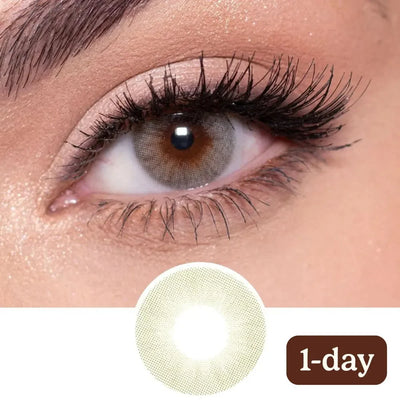
Frankie’s heterochromia is one of the most important EyeCandys styling opportunities in the costume.
Both the classic and G3 versions are commonly shown with one blue eye and one green eye. Character references identify the right eye as blue and the left as green, although mirrored artwork, photographs, and flipped images can make the placement appear reversed.
Choose one reliable reference and keep the placement consistent throughout the makeup and photographs.
Blue Contact Options
A vivid medium blue creates a strong animated effect.
Electric blue, aqua, sapphire, and icy blue can all work depending on the chosen version. Classic Frankie often suits a clear doll-like blue, while G3 can support a brighter cyan or electric shade.
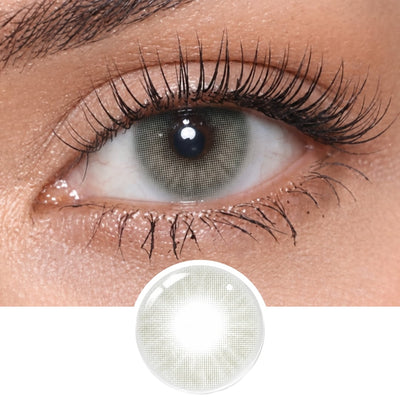
A contact with visible radial lines will look more dimensional than a flat blue circle.
Green Contact Options
Emerald, mint, jade, and bright natural green can recreate Frankie’s second eye.
Classic Frankie often suits a clear medium green. G3 designs can support a brighter or cooler green that coordinates with the cyan skin and blue hair accents.
Choose blue and green lenses with similar opacity, graphic diameter, and border thickness. One very natural lens paired with one heavily enlarging anime contact may make the eyes look unintentionally uneven.
Enlarging Blue and Green Contacts
Low- or moderate-enlargement contacts can create the wide-eyed doll effect associated with Monster High.
A medium dark ring helps the two colors feel like part of the same set, even when the lenses are sold individually.
Avoid extreme enlargement that significantly interferes with the sharper, fashion-doll shape of Frankie’s eyes.
Contacts for Dark Eyes
Dark brown eyes generally need opaque or high-coverage contacts for both the blue and green to remain visible.
Translucent lenses may blend with the natural iris and create two muddy or very dark shades rather than clear heterochromia.
Look for blue and green designs from the same series when possible. This helps maintain similar coverage and size.
Contacts for Light Eyes
Light blue, grey, green, and hazel eyes may work with translucent enhancement contacts.
The natural iris will affect each color differently. A blue lens may appear very bright over grey, while the green side may shift toward teal or hazel.
Use opaque lenses when matching the two designs is more important than preserving a natural blend.


Frankie Stein Contact Lens Safety
All colored and decorative contact lenses are medical devices, including plano lenses that do not correct vision.
Wash and dry your hands before handling the lenses. Insert them before applying face paint, eyeliner, false lashes, setting spray, prosthetic stitches, or wig products.
Never share lenses or expose them to tap, bottled, distilled, pool, lake, or ocean water.
Use the correct contact-lens solution and follow the wearing, cleaning, storage, and replacement instructions for each product.
Remove the lenses immediately if you experience pain, persistent redness, discharge, unusual light sensitivity, blurred vision, significant discomfort, or another change in vision.
Keep backup corrective glasses available so the contacts can be removed without sacrificing necessary vision correction.
Frankie’s Eye Makeup
Frankie’s eye makeup should frame the mismatched contacts without hiding them.
Classic Frankie can use lilac, smoky grey, silver, or cool blue shadow with defined black lashes. The original design is often depicted with lilac eyeshadow and strong lashes.
G3 Frankie can support brighter graphic eyeliner, blue accents, pink shadow, metallic details, or small lightning shapes.
Keep the darkest liner close to the lashes. A very thick black border around the entire eye may reduce the visible contrast between the blue and green contacts.
False lashes can create a fashion-doll look, but they should not brush against the lenses or interfere with blinking.
A small silver highlight in the inner corners connects the makeup to the bolts, jewelry, and prosthetic leg.
Recreating the G3 Prosthetic Leg
Generation 3 Frankie has a silver prosthetic left leg decorated with stitching and lightning-related details.
Cosplayers who already use a prosthetic leg can decorate or cover it only when doing so is safe, comfortable, and compatible with their normal mobility needs.
Do not apply paint, glue, vinyl, lights, or costume hardware directly to a medical prosthesis without confirming that the materials will not damage it or interfere with its function.
Removable fabric sleeves, stretch covers, and externally secured decorations may provide safer customization options, depending on the individual prosthesis and professional guidance.
Cosplayers who do not use a prosthetic can create the visual effect with a silver legging, boot cover, foam armor sleeve, metallic fabric, or painted compression-style garment.
The costume piece should never immobilize the knee or ankle. It should also remain clearly a costume interpretation rather than attempting to imitate disability for comedy.
G3 Frankie’s prosthetic is part of their character design and active lifestyle. Portray it as functional, expressive, and integrated into the outfit.
Choosing Frankie’s Shoes
Frankie’s shoes are often chunky, platformed, strapped, or boot-like.
For classic Frankie, black-and-white platform shoes with blue accents work well. Mary Jane straps, stitched panels, or contrasting soles can reinforce the school-uniform styling.
For G3, black combat boots or chunky platform shoes fit the more contemporary wardrobe. Current official dolls frequently pair Frankie with bold black footwear and electric accessories.
Convention shoes should be stable and comfortable.
Foam shoe covers can create exaggerated Monster High proportions without requiring unsafe platform heights. Keep the sole of the original shoe exposed to maintain traction.
Choosing Frankie’s Accessories
Frankie’s accessories can repeat the costume’s electrical and stitched themes.
Lightning-bolt earrings, silver chains, zipper jewelry, safety pins, metallic handbags, ties, belts, and mismatched earrings all work naturally.
Classic Frankie often includes Skulette-inspired jewelry and school-uniform accessories. G3 Frankie frequently wears lightning-bolt earrings, metallic jewelry, backpacks, and modern tech accessories.
Do not add every accessory at once.
Choose a few pieces that support the specific outfit. A plaid school costume may need a tie and small earrings, while a collector-inspired gown can support layered chains and larger statement jewelry.
Frankie Stein-Inspired Nail Art
Frankie nail art can combine stitches, plaid, electricity, and mismatched colors.
A coordinated manicure could alternate black, white, blue, green, and silver. One nail might feature a blue lightning bolt, another a green plaid pattern, and another a black stitched seam over a pale mint or cyan base.
Mismatched hands can also fit Frankie’s assembled aesthetic. One hand can emphasize blue and silver while the other uses green and black.
Other useful details include tiny neck bolts, zipper patterns, safety pins, argyle, metallic foil, patchwork blocks, and black French tips.
Gel nail stickers can simplify the fine stitch marks, plaid lines, and small lightning shapes.
Short or medium nails will make it easier to adjust the wig, handle contact lenses, secure bolts, and repair costume pieces.

Posing Like Frankie Stein
Frankie should feel animated, curious, and full of newly discovered energy.
Try tilting the head while examining something unfamiliar, raising one finger as though an idea has just arrived, or looking down at a stitched hand with fascinated surprise.
A wide smile works well for friendly school portraits. For a more fashion-focused image, shift into an angular doll pose with one knee bent and the hands positioned deliberately near the face or waist.
Electric poses can use spread fingers, raised arms, or a sudden frozen movement as though a charge has passed through the body.
Avoid reducing Frankie to slow Frankenstein-style walking. The character is youthful, expressive, social, and often enthusiastic.
A set of photographs should show curiosity, confidence, awkwardness, and fashion attitude rather than one repeated monster pose.
Planning a Frankie Stein Photoshoot
Strong locations include school hallways, science classrooms, laboratories, workshops, libraries, locker areas, gothic interiors, fashion studios, and neon-lit sets.
A science-lab setting connects with Frankie’s creation and electric theme. Use safe glassware props, notebooks, diagrams, and battery-operated lights rather than real chemicals or exposed electronics.
Blue and green lighting can emphasize the mismatched eyes. A cool backlight can create the suggestion of electricity around the wig.
Close portraits should highlight the heterochromia, stitches, hair pattern, and bolts.
Full-body photographs can show the plaid, platforms, prosthetic-leg styling, and asymmetric construction.
Digital editing is the safest way to add sparks, lightning arcs, glowing bolts, and electrical energy.
Frankie in a Monster High Group Cosplay
Frankie works naturally with Draculaura, Clawdeen Wolf, Cleo de Nile, Lagoona Blue, Ghoulia Yelps, Deuce Gorgon, and other Monster High students.
A group should decide whether it is using Generation 1, Generation 3, collector fashion, or original redesigns.
Mixing generations can be intentional, especially for a “through the years” concept, but it should be visually clear. A classic mint-green Frankie beside a cyan G3 Frankie can create a particularly effective comparison.
Group photographs can recreate school portraits, hallway scenes, fashion-editorial poses, science experiments, dances, or lunch-table moments.
Monster High’s emphasis on individuality means the group does not need identical costume quality or body styling. The characters are designed to look different from one another, and that contrast is part of the visual appeal.
Creating the Costume Respectfully
Anyone can cosplay Frankie regardless of gender, race, age, body type, or disability.
Classic Frankie uses she/her pronouns within the original continuity. G3 Frankie is nonbinary and uses they/them pronouns. Use the language that matches the version being portrayed.
The skin color, stitches, and prosthetic details are fictional monster traits. They should be recreated through costume materials and cosmetic styling rather than used to imitate real injuries or make disability the subject of a joke.
A cosplayer does not need to paint their skin to portray Frankie. The hair, heterochromia, outfit, stitches, and electric accessories can create a recognizable look without full coverage.
The costume can also be adapted for sensory, mobility, religious, or coverage needs. Longer skirts, trousers, flat shoes, looser shirts, gloves, head coverings, or seated cosplay interpretations can preserve the design’s colors and motifs.
Making a Frankie Costume Comfortable
Frankie costumes can involve several layers: wig, body paint, collared shirt, tie, mesh sleeves, jacket, platforms, bolts, and accessories.
Test everything together before the event.
Make sure the neck bolts do not restrict swallowing or head movement. Check that body paint does not transfer heavily onto the shirt collar. Walk in the shoes and sit in the skirt before committing to a full day.
Keep all electrical costume effects removable. Battery packs should be easy to reach and switch off.
Carry cosmetic touch-up products, a cloth for body-paint transfer, spare wig pins, fashion tape, safe adhesive, contact-lens supplies, and backup glasses.
If the costume includes a prosthetic leg cover or metallic sleeve, confirm that it does not bunch behind the knee, slide downward, or change your normal walking pattern.
Common Frankie Stein Cosplay Mistakes
One common issue is blending the generations without realizing it.
Mint skin, classic neck bolts, G3 blue hair, a silver prosthetic leg, and an unrelated collector gown can all belong to Frankie separately, but combining them without a clear concept may make the costume feel inconsistent.
Choose a reference or state that the costume is an original hybrid.
The hair should contain clear black-and-white contrast. A mostly white wig with one hidden black extension may not read as Frankie in photographs.
When creating heterochromia, choose blue and green lenses with similar coverage, size, and pattern. Two completely different lens styles can make one eye appear much larger than the other.
Avoid drawing dozens of identical stitches across every visible area. A few well-placed seams look more intentional.
Do not use heavy metal bolts or rigid pieces against the neck.
Body paint should be cosmetic-grade, fully tested, and kept away from the eyes and contact lenses.
Finally, do not make Frankie gloomy simply because they are connected to Frankenstein’s monster. Curiosity, kindness, enthusiasm, and the excitement of discovering the world are central to the character.
Bring Your Frankie Stein Cosplay to Life
Frankie Stein is a strong cosplay choice because the character can be recognizable at several levels of complexity.
A beginner can combine plaid clothing, a black-and-white wig, drawn stitches, and mismatched blue and green eyes.
Intermediate cosplayers can sew a school-inspired outfit, customize a jacket, add lightweight bolts, and coordinate electric accessories.
Advanced creators can build collector-fashion interpretations, illuminated costume details, detailed body paint, custom patchwork garments, and a safe prosthetic-leg effect.
Whichever version you choose, keep the central idea clear. Frankie is made from many different pieces, but those pieces come together to create a character who is curious, stylish, optimistic, and entirely their own.
Find Your Perfect Pair
Shop EyeCandys colored contacts designed with comfort in mind. From subtle natural lenses to bold cosplay shades, find the pair that completes your look.