
Introduction
Dip powder nails are popular for a reason. They're long-lasting, glossy, and durable enough to hold up through everyday life without chipping after a few days. But that same staying power also means removal takes a little more patience than regular polish.
If you've ever been tempted to peel, pick, or pry off your dip manicure, we get it. Once your nails start growing out or the edges begin to lift, it can be hard not to mess with them. But removing dip powder the wrong way can strip layers from your natural nails, leaving them thin, weak, brittle, or sensitive.
The good news? You can remove dip powder nails at home safely as long as you use the right tools, take your time, and give your nails a little care afterward.
Here's how to remove dip powder at home without wrecking your natural nails.
Can You Remove Dip Powder Nails at Home?
Yes, you can remove dip powder nails at home. The key is to soften the product first instead of forcing it off.
Dip powder manicures are designed to bond firmly to the nail, which is why they last so long. That also means they do not come off the same way regular nail polish does. A quick swipe of remover will not be enough. You'll need to file the shiny top layer, soak the nails, and gently remove the softened product.
The biggest thing to remember is this: if the dip powder does not come off easily, it is not ready yet.
Scraping harder will not make the process safer. It usually just leads to nail damage. When in doubt, soak a little longer.
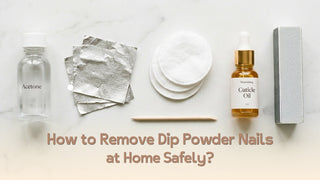
What You'll Need to Remove Dip Powder Nails
Essential
- ✓100% acetone
- ✓A coarse nail file or buffer
- ✓Cotton balls or cotton pads
- ✓Aluminum foil or nail clips
- ✓An orangewood stick or cuticle pusher
- ✓Paper towels
- ✓Cuticle oil
- ✓Hand cream or a rich moisturizer
- ✓A gentle nail buffer
Optional but helpful
- +A small bowl for soaking
- +Petroleum jelly to protect the skin around your nails
- +A warm towel to help speed up soaking
- +A glass or ceramic bowl if you prefer the bowl method
Do You Need Acetone to Remove Dip Powder?
For most dip powder manicures, yes. Acetone is the most effective option for breaking down the product.
Non-acetone nail polish remover is gentler, but it usually is not strong enough to remove dip powder efficiently. You may end up soaking longer, scraping more, and causing more damage than if you had used acetone properly from the start.
That said, acetone can be drying. This is why aftercare matters. Once the dip powder is removed, your nails and cuticles will benefit from oil, moisture, and a little break before your next intense manicure.
Lay everything out before you start — once your fingers are wrapped in foil, digging through drawers isn't fun.
How to Remove Dip Powder Nails at Home Step by Step
File Off the Shiny Top Coat
Start by gently filing the surface of each nail. The goal is to remove the glossy top coat, not file all the way down to your natural nail. That shiny layer acts like a seal, so breaking it down allows the acetone to reach the dip powder underneath. Use light pressure and focus on dulling the shine. Once the nail surface looks matte and slightly rough, you can move on to soaking. Be careful not to over-file. If you start to feel heat, tenderness, or sensitivity, stop.
Protect the Skin Around Your Nails
Acetone can dry out your skin, especially around the cuticles and fingertips. Before soaking, apply a small amount of petroleum jelly or cuticle oil around the skin surrounding each nail. Try not to get too much on the nail itself, since you still want the acetone to reach the dip powder. This step is optional, but it can make the process feel a little less harsh on your skin.
Soak Cotton in Acetone
For the foil method, soak a cotton ball or cotton pad in acetone and place it directly on top of the nail. Then wrap the fingertip with a small piece of aluminum foil to hold the cotton in place. Repeat this on each nail. The foil method is one of the easiest ways to remove dip powder at home because it keeps the acetone concentrated on the nail. It is also less messy than soaking your fingertips in a bowl. If you have nail clips, you can use those instead of foil.
Let Your Nails Soak
Let your nails soak for about 10 to 20 minutes. The exact timing depends on how thick the dip powder is, how many layers were applied, and how much of the top coat you filed off first. Thicker manicures may need more time. This is the part where patience really matters. If you unwrap a nail and the product still feels hard, smooth, or firmly attached, rewrap it and soak for a few more minutes. Do not force it. The dip powder should look softened, flaky, or gummy before you try to remove it.
Still feels hard? Rewrap and give it 5 more minutes. Forcing it is how nail damage happens.Gently Push Off the Softened Dip Powder
Once the product has softened, use an orangewood stick or cuticle pusher to gently push it away from the nail. Work slowly from the cuticle area toward the tip of the nail. The dip powder should slide or flake off with light pressure. If you hit a section that does not want to move, stop and soak again. Do not dig into the nail plate or scrape aggressively. This is where most at-home nail damage happens. The product should be soft enough to remove gently. If it is not, it needs more time.
Buff Away Any Leftover Residue
After most of the dip powder is removed, you may notice a little leftover residue. Use a gentle buffer to smooth the surface of the nail. Keep this step light. Your nails may already be a little dry from the acetone, so aggressive buffing can make them feel thinner or weaker. The goal is not to make the nail perfect. The goal is to remove leftover product without damaging the natural nail underneath.
Wash and Moisturize
Once the dip powder is fully removed, wash your hands with gentle soap and warm water to remove any acetone residue. Then apply cuticle oil and a rich hand cream. Massage the oil into your cuticles and the nail surface, giving extra attention to any areas that feel dry. Your nails may look a little dull right after removal. That is normal. A little hydration can make a big difference.
Bowl Method vs. Foil Method: Which Is Better?
There are two common ways to soak off dip powder at home: the foil method and the bowl method.
With the foil method, acetone-soaked cotton is placed directly on each nail and wrapped with foil. This keeps the acetone focused on the dip powder and reduces how much skin is exposed.
With the bowl method, you pour acetone into a small bowl and soak your fingertips directly.
Both can work, but the foil method is usually better if you want a more targeted approach. The bowl method can feel faster, but it exposes more skin to acetone and can be more drying.
If you use the bowl method, avoid soaking your entire fingertips for longer than necessary. You can also apply petroleum jelly around the skin first to help reduce dryness.
| 🫙 Foil Method | 🥣 Bowl Method | |
|---|---|---|
| Acetone concentration | Targeted — stays on the nail | Diffused — affects more skin |
| Skin dryness risk | Lower | Higher |
| Ease of setup | Moderate — needs foil + cotton | Simple — pour and soak |
| Mess level | Low | Can spill |
| Can do hands-free? | Yes (once wrapped) | No — fingertips must stay submerged |
| Recommended for | Most at-home removals | Quick soaks when you're comfortable with acetone |
What Not to Do When Removing Dip Powder Nails
Removing dip powder safely is just as much about what you avoid as what you do.
Do not peel the dip powder off. Peeling can take layers of your natural nail with it, which may leave your nails weak, thin, and uneven.
Do not pry up lifted edges. If part of the manicure is lifting, it can be tempting to pull it off. But even lifted dip powder may still be bonded to sections of the nail.
Do not use aggressive metal tools. Metal tools can be too harsh if you're not careful. An orangewood stick is usually gentler for at-home removal.
Do not over-file your natural nail. Filing the top coat is helpful. Filing into the natural nail is not.
Do not rush the soaking process. If the product is not coming off easily, it needs more time. Rushing usually leads to scraping, and scraping leads to damage.
Do not skip aftercare. Acetone can leave nails and cuticles feeling dry. Cuticle oil and hand cream are not just a nice finishing touch. They help your nails recover after removal.
Peeling vs. soaking — the difference in your nail health is visible immediately.
Why Do Nails Feel Weak After Dip Powder Removal?
Your nails may feel weak after dip powder removal for a few reasons.
Sometimes, the nails are simply dry from acetone. Other times, the natural nail has been damaged by peeling, over-filing, or scraping too hard during removal.
Dip powder itself can also feel very protective while it is on the nail. Once it is removed, your natural nails may feel more flexible than you're used to.
If your nails feel thin, bendy, sore, or sensitive, give them a break before applying another long-wear manicure. Keep them short, hydrated, and protected while they recover.
How to Care for Your Nails After Removing Dip Powder
Once your dip powder is off, your nails deserve a little reset.
Start with cuticle oil. Apply it around the base of each nail and massage it in. You can reapply throughout the day, especially if your nails feel dry.
Follow with a rich hand cream to help restore moisture to the skin and fingertips.
If your nails feel weak, keep them trimmed short for a little while. Shorter nails are less likely to snag, bend, or break while they recover.
You may also want to avoid harsh buffing, picking, or immediately applying another heavy nail enhancement. A few days of gentle care can help your nails feel stronger and smoother.
What Can You Wear After Removing Dip Powder?
If you love having a polished manicure but want something easier after dip removal, press-on nails can be a great option.
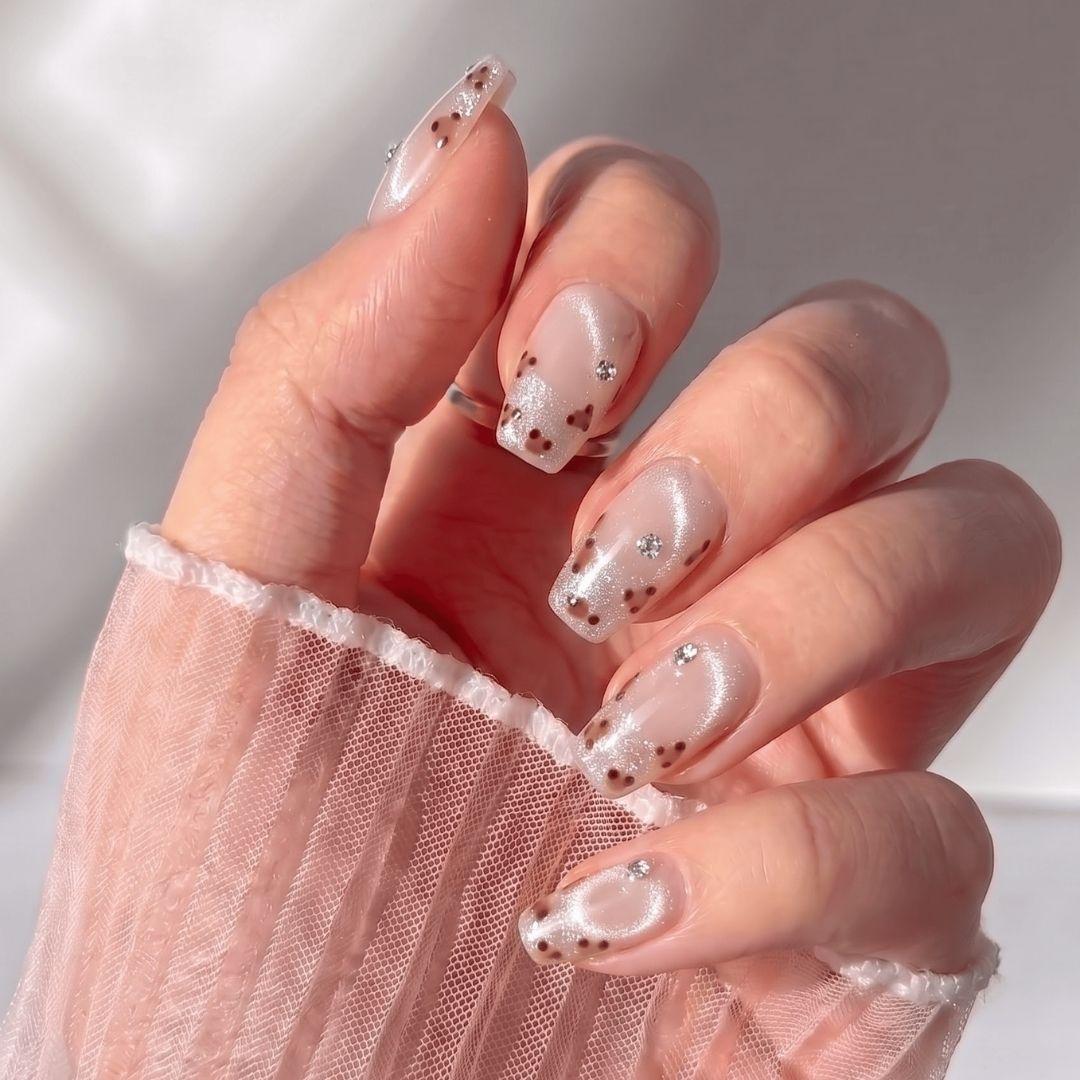
Press-on nails are perfect when you want a fresh, styled look without committing to another dip powder manicure right away. They're easy to apply at home, come in a variety of shapes and designs, and can give your nails a put-together finish in minutes.
They're also a fun option for beauty lovers who like changing their look more often. Whether you want soft neutrals, bold statement nails, romantic designs, or something playful for an event, press-ons make it easy to switch things up without sitting through a salon appointment.
If your natural nails feel healthy after dip removal, EyeCandys press-on nails can be a cute, low-commitment way to refresh your manicure. Just make sure your nails are clean, dry, and free of leftover acetone or oils before applying them.
If your nails feel sore, thin, or irritated, give them a little recovery time first.
Press-ons are the easiest way to stay polished while your natural nails recover.
Can You Remove Dip Powder Without Acetone?
Technically, some people try to remove dip powder without acetone, but it is usually not the best method.
Warm water, oil, and soap may help loosen some nail products, especially if they are already lifting, but they are not very effective for fully removing dip powder. Since dip powder is designed to be durable, trying to remove it without acetone often leads to more picking and scraping.
That can cause more damage than a proper acetone soak.
For most at-home dip powder removal, acetone is the most reliable option. The key is to use it carefully and follow with plenty of moisture afterward.
How Long Does Dip Powder Removal Take?
Dip powder removal usually takes about 20 to 30 minutes from start to finish.
The soaking step itself may take 10 to 20 minutes, depending on how thick the manicure is. If the dip powder was applied in several layers or has a strong top coat, it may take longer.
It is better to give yourself extra time than to rush. Put on a show, grab your supplies, and treat the process like a mini beauty reset.
How Long Should You Wait Before Getting Dip Powder Again?
This depends on how your nails feel after removal.
If your nails feel strong, smooth, and healthy, you may be comfortable getting another manicure soon. If they feel thin, brittle, sore, or bendy, it is a good idea to give them a break.
During that break, focus on hydration and gentle nail care. Cuticle oil, hand cream, and keeping your nails short can help reduce breakage while they recover.
If you still want a finished look during your break from dip powder, press-on nails are a great option because they let you enjoy a styled manicure without going straight back into another salon-style enhancement.
Frequently Asked Questions About Removing Dip Powder Nails
Is it bad to remove dip powder nails at home?
Not if you remove them carefully. The biggest risk comes from peeling, prying, over-filing, or scraping too aggressively. If you soak the product properly and remove it gently, at-home removal can be done safely.
Can I peel off dip powder if it is already lifting?
No. Even if part of the dip powder is lifting, other areas may still be attached to your natural nail. Peeling it off can pull up layers of your nail and cause damage.
How do I know when dip powder is ready to come off?
The product should look softened, flaky, or gummy. It should come away with gentle pressure. If it still feels hard or stuck, soak it longer.
Can I use regular nail polish remover?
Regular nail polish remover usually will not work unless it contains acetone. For best results, 100% acetone is typically the most effective option for dip powder removal.
Why are my nails white or dry after acetone?
Acetone can temporarily dry out the nail surface and surrounding skin. Wash your hands after removal, then apply cuticle oil and hand cream to restore moisture.
Can I apply press-on nails after removing dip powder?
Yes, as long as your natural nails are clean, dry, and healthy. If your nails feel sore, thin, or damaged, give them time to recover before applying anything new.
Are press-on nails easier to remove than dip powder?
In general, yes. Press-on nails are usually easier to apply and remove at home than dip powder, especially when applied and removed according to the instructions. They're a great option if you like changing your manicure often.
Final Takeaway: Be Patient With the Process
Dip powder nails can be removed at home, but they should never be peeled or forced off. The safest method is to file the shiny top layer, soak the product with acetone, gently push away the softened dip powder, and follow with nourishing aftercare.
The whole process comes down to patience. If the product is not ready, soak longer. If your nails feel dry afterward, moisturize. If they feel weak, give them a break.
And when you're ready for your next manicure moment, EyeCandys press-on nails make it easy to get a fresh, stylish look at home without the commitment of another dip powder set.
Cuticle oil is non-negotiable post-removal. Your nails will thank you within 24 hours.
Your Nails Deserve a Glow-Up
Skip the salon. EyeCandys press-on nails go on in minutes, last up to 2 weeks, and come off without the damage. Hundreds of designs — find your next set.