
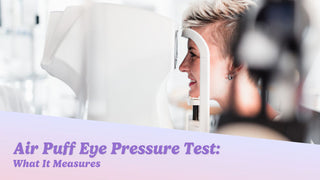
You are seated in the exam chair, chin resting against the cool plastic frame, when the machine in front of you lets out a short, sharp puff of air directly at your eye. Your eyelid blinks before you can stop it, and for a second you wonder what that burst of air was even checking. That quick, slightly startling moment is the air puff eye pressure test, one of the most common screening tools used during a routine eye exam, and it plays a bigger role in protecting your long-term vision than most people realize.
What Is the Air Puff Eye Pressure Test?
The air puff eye pressure test, known clinically as non-contact tonometry, is a screening method that measures the pressure inside your eye without any instrument touching it, though the brief puff of air itself does contact the surface of the eye. It is one of several forms of tonometry, a category of eye tests designed to estimate intraocular pressure (IOP), the fluid pressure inside the eyeball. Because the test uses a puff of air instead of a probe, it is a quick, low-risk way to check eye pressure, and because it needs no numbing eyedrops and minimal training to operate, it shows up often in general eye exams and vision screenings. That said, the puff startles some patients, and many find contact tonometry, done with numbing drops, just as comfortable or more so.
How the Air Puff Test Works
During the test, you rest your chin and forehead against a stabilizing frame while looking at a fixed target inside the machine. The device releases a brief, controlled burst of air onto the center of your cornea, the clear, dome-shaped front surface of your eye. Sensors inside the machine measure how much the cornea flattens, or applanates, in response to that puff of air, and how quickly it springs back to its normal shape. This process is a form of tonometry, and the resulting measurement is converted into a pressure reading expressed in millimeters of mercury (mmHg), the same unit used for blood pressure. The entire test typically takes only a few seconds per eye, and no numbing drops or direct contact with the eye are required.
What the Air Puff Test Actually Measures
The number the air puff test produces is an estimate of intraocular pressure, which reflects the balance between fluid production and drainage inside the eye. The eye continuously produces a clear fluid called aqueous humor, which nourishes internal structures and contributes to maintaining the shape of the eye. That fluid normally drains out through a mesh-like channel near the base of the iris. When production and drainage stay balanced, eye pressure remains stable. When drainage slows down or production increases, pressure inside the eye rises. The air puff test simply measures that pressure at a single moment, and readings can become less accurate as pressure climbs above the normal range, which is one reason abnormal results get rechecked with other methods. It is important to understand that the test measures pressure, not vision sharpness or eye health directly. A reading outside the expected range is a signal for further evaluation, not a diagnosis on its own.
Why Eye Pressure Matters for Vision
Eye pressure matters because sustained elevated pressure can gradually damage the optic nerve, the bundle of over a million nerve fibers that carries visual information from the eye to the brain. This kind of damage often develops slowly and without noticeable symptoms in its early stages, which is why regular screening matters even for people who feel their vision is fine. According to the American Academy of Ophthalmology, elevated eye pressure, called ocular hypertension, increases the risk of optic nerve damage over time, and catching it early gives treatment the best chance of preserving vision before permanent loss occurs. Once optic nerve damage occurs, the condition is called glaucoma, while elevated pressure alone, without nerve damage, typically is not.
Normal Eye Pressure Ranges Explained
Normal intraocular pressure generally falls between 10 and 21 mmHg, with most healthy adults landing somewhere between 12 and 18 mmHg. Eye pressure is not perfectly static throughout the day. Healthy eyes typically fluctuate by about 3 to 5 mmHg over a 24-hour period, often peaking in the early morning hours. Readings above 21 mmHg are generally flagged for closer monitoring, though a single high reading does not automatically mean something is wrong. Eye care providers typically look at pressure trends over multiple visits, combined with other diagnostic tests, before drawing conclusions.

What High Eye Pressure Can Signal
A reading above the typical range can point toward several possibilities. The most well-known is ocular hypertension, a condition where eye pressure sits higher than average without any detectable damage to the optic nerve yet. Ocular hypertension does not automatically become glaucoma, but it does raise the statistical risk, which is why eye doctors tend to monitor it closely. Elevated pressure can also result from other factors, including certain medications, inflammation inside the eye, or a structural issue with how fluid drains from the eye. None of these are things a single air puff reading can diagnose outright, but they explain why an elevated number prompts a follow-up conversation rather than immediate alarm.
What Low Eye Pressure Can Signal
Unusually low eye pressure is less common but still worth understanding. It can occur after certain eye surgeries, from inflammation that reduces fluid production, or from a structural issue that increases drainage more than normal. Interestingly, low or average eye pressure does not rule out glaucoma entirely. A subtype called normal-tension glaucoma, described by the National Eye Institute, involves optic nerve damage that develops even when intraocular pressure stays within the standard range. This is one reason eye doctors do not rely on the air puff test alone. Pressure is one data point among several used to evaluate overall eye health.
Conditions the Air Puff Test Can Help Detect
The primary condition the air puff test screens for is glaucoma, a group of eye diseases that damage the optic nerve and can lead to permanent vision loss if left untreated. Glaucoma is often called a silent condition because peripheral vision loss can progress for years before a person notices anything different. According to the American Academy of Ophthalmology, diagnosing glaucoma typically involves combining a tonometry reading with an optic nerve examination, a visual field test, and imaging of the retina, since pressure alone does not confirm the diagnosis. The air puff test also helps flag ocular hypertension, which, while not a disease itself, is a recognized risk factor that eye doctors track over time to catch any progression early.

Other Ways Eye Pressure Is Measured
The air puff test is not the only tonometry method available, and it is not always the most precise. Eye doctors have several tools in their arsenal, and which one gets used often depends on the purpose of the visit, whether it is a routine screening or a closer look prompted by a concerning reading.
Goldmann Applanation Tonometry
Goldmann applanation tonometry is widely regarded as the clinical gold standard for measuring eye pressure. Instead of a puff of air, this method uses a small, numbed probe that gently touches the surface of the cornea to measure the force needed to flatten a specific area of it. Because it makes direct contact under controlled conditions, Cleveland Clinic notes that Goldmann tonometry tends to produce more precise readings than non-contact methods, which is why it is frequently used to confirm a borderline or elevated air puff result.
Other Tonometry Methods
Beyond the air puff test and Goldmann tonometry, eye doctors may use a handheld tonometer called a Tono-Pen for patients who cannot sit at a standard exam table, or an iCare tonometer, which uses a lightweight probe that briefly taps the cornea without numbing drops. Pachymetry, a related test that measures corneal thickness, is often performed alongside tonometry because a thicker or thinner than average cornea can skew pressure readings, making the measurement look higher or lower than the true internal pressure.
How the Air Puff Test Compares to Other Methods
The main advantage of the air puff test is convenience. It requires no numbing drops, no direct contact with the eye, and takes only seconds, which makes it well suited for quick screenings and for patients who feel uneasy about anything touching their eye. The trade-off is precision. Non-contact tonometry can be more sensitive to factors like corneal thickness, rapid eye movement, or an anxious blink reflex, all of which can throw off the reading slightly. For this reason, an elevated or unusual air puff result is typically followed up with Goldmann applanation tonometry before any treatment decision is made.
What to Expect Before Your Air Puff Test
Preparation for the air puff test is minimal. There is no need to fast, adjust medication, or avoid wearing contact lenses beforehand, though some providers may ask you to remove contacts briefly for comfort. The test is usually done as part of a broader comprehensive eye exam, alongside a visual acuity check and a look at the front and back structures of the eye. If you wear eye makeup, it is worth knowing that heavy mascara or eyeliner close to the lash line is sometimes asked to be minimal on exam day simply to keep the equipment clean, though this is more of a courtesy than a strict requirement.
What to Expect During the Test
Once seated, you will place your chin and forehead against the machine's stabilizing rests and focus on a small light or target inside the device. A technician or the machine itself will align the sensor with your eye. You will feel a brief puff of air, similar to a quick, focused breath, and most people blink reflexively. This is completely normal and does not interfere with getting an accurate reading, since the machine typically takes several rapid measurements and uses the most reliable ones. The test is repeated on the second eye, and the whole process for both eyes usually takes well under a minute.

What Happens After the Test
There is no recovery time needed after an air puff test. Vision is not blurred, no numbing drops need to wear off, and most people can drive or return to normal activities immediately afterward. If your reading falls within the normal range, the result typically becomes one line item in an otherwise unremarkable exam. If the reading is elevated or unusually low, your eye doctor will likely recommend a follow-up test, such as Goldmann applanation tonometry, along with an optic nerve evaluation, before drawing any conclusions about your eye health.
Is the Air Puff Test Accurate?
The air puff test is a reasonably reliable screening tool, but it is not considered definitive on its own. Because it relies on how quickly the cornea flattens and rebounds, individual variation in corneal thickness or curvature can introduce a margin of error. A cornea that is thicker than average can make pressure readings appear higher than they actually are, while a thinner cornea can make them appear lower. This is exactly why pachymetry, which measures corneal thickness, often accompanies tonometry when a clearer picture is needed. Used as a first-pass screening tool within a larger exam, the air puff test does its job well: flagging readings that deserve a closer look.

Who Should Get Regular Eye Pressure Screening
Eye pressure screening is a standard part of a comprehensive eye exam for most adults, but certain groups benefit from more frequent monitoring. People with a family history of glaucoma, adults over age 40, individuals of African, Hispanic, or Asian descent (who face statistically higher glaucoma risk according to population studies cited by the American Academy of Ophthalmology), and anyone with diabetes or a history of eye injury are generally advised to keep a closer eye on their intraocular pressure trends. People who wear contact lenses, including colored or cosmetic lenses, should also keep up with routine comprehensive exams, since these visits track overall eye health beyond just vision correction.

Tips for a Comfortable Eye Pressure Test
A few small habits can make the experience smoother. Try to keep both eyes open and resist the urge to squeeze them shut before the puff, since a relaxed blink reflex allows the machine to capture a cleaner reading on the first try. Focus on the target light rather than anticipating the air puff itself. If you wear contact lenses, bring your case in case your provider asks you to remove them briefly. And if anxiety around eye tests is a real concern, it is reasonable to mention it to the technician beforehand. Most are used to walking nervous patients through the process step by step.

How Often You Should Repeat the Test
For most adults with normal readings and no risk factors, eye pressure gets checked at the same interval as a standard comprehensive eye exam, generally every one to two years. Those with elevated readings, a family history of glaucoma, or an existing glaucoma diagnosis are often asked to return more frequently, sometimes every three to six months, so their eye doctor can track whether pressure is trending upward, staying stable, or responding well to treatment.
Final Thoughts
The air puff eye pressure test is a quick, low-risk screening step that gives your eye doctor an early window into how your eyes are functioning internally, well before any change in vision would be noticeable on its own. A single reading rarely tells the whole story, but paired with the rest of a comprehensive eye exam, it plays a meaningful role in catching conditions like glaucoma early, when treatment has the best chance of protecting your long-term vision. Keeping up with routine eye exams, regardless of how sharp your vision currently feels, remains one of the simplest ways to stay ahead of changes that would otherwise go unnoticed.
Frequently Asked Questions
Does the air puff eye test hurt?
No. The air puff test does not involve any contact with the eye, and the sensation is a brief burst of air rather than pain. Most people find it startling for a split second rather than uncomfortable.
What does a high reading on the air puff test mean?
A high reading means eye pressure is above the typical range and warrants a closer look. It does not automatically mean a person has glaucoma, but it does prompt follow-up testing, such as Goldmann applanation tonometry, to confirm the result and check the optic nerve.
Can the air puff test detect glaucoma on its own?
Not by itself. The air puff test measures eye pressure, which is one risk factor for glaucoma, but a full diagnosis requires additional tests, including an optic nerve exam, visual field testing, and imaging of the retina.
How often should eye pressure be checked?
Most adults with normal results and no risk factors have eye pressure checked every one to two years as part of a routine comprehensive eye exam. People with elevated readings or a family history of glaucoma are typically monitored more frequently.
Is normal eye pressure a guarantee that glaucoma is not present?
No. A subtype called normal-tension glaucoma can develop even when intraocular pressure readings fall within the standard range, which is why eye doctors evaluate the optic nerve and visual field alongside pressure readings.
Can contact lens wearers get the air puff test?
Yes, though some providers ask patients to remove contact lenses briefly before testing for comfort and accuracy. Contact lens wearers should keep up with regular comprehensive eye exams, which typically include eye pressure screening as standard practice.
Great eye health checkups deserve to be matched by great everyday eye comfort.
If your routine exam includes a conversation about contact lenses, EyeCandys offers colored and clear contact lenses built with breathable, non-ionic hydrogel materials designed for all-day comfort, backed by a 30-day guarantee for first-time buyers.
Rated 4.8 stars from 6,900+ reviews.