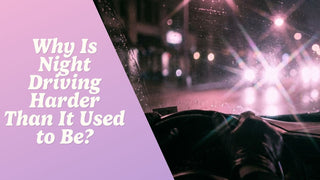

Your daytime vision feels perfectly fine. You can read, scroll, work. Then the sun goes down and suddenly everything turns into a blurry, halo-ringed mess. Oncoming headlights look like starbursts. Street signs are fuzzy until you're practically on top of them. You squint a lot more than you used to.
Sound familiar? You're not imagining it, and you're not alone. Night vision problems are one of the most common — and most overlooked — reasons people should be booking an eye exam.
Here's what's actually happening, and what you should do about it.
Why Night Vision Is Harder Than Day Vision — Biologically
Your eyes use two types of photoreceptor cells: cones (for daylight and color) and rods (for low-light and peripheral vision). When light levels drop, your pupils dilate to let in more light, and your visual system shifts from cone-dominant to rod-dominant processing.
The catch: any uncorrected refractive error — or a condition affecting your lens, retina, or cornea — becomes much more noticeable in low light, because your eye has less contrast information to work with. There's no bright ambient light to compensate. Imperfections in the optical system of your eye are exposed.
The Most Common Causes of Worse Vision at Night
If your vision is noticeably worse after dark, one (or more) of these is likely responsible:
Myopia (Nearsightedness)
Myopia causes distant objects to appear blurry because light focuses in front of the retina rather than on it. In daytime conditions, your brain compensates with contrast cues. At night, those cues disappear — and that fuzzy driver's view becomes genuinely difficult and potentially dangerous. Undiagnosed or under-corrected myopia is one of the top culprits behind poor night vision in adults under 40.
Hyperopia
Uncorrected hyperopia blurs both near and distance vision, and is a main cause of blurred night vision. Many studies find that hyperopia is more common in adult populations throughout the world than myopia.
Astigmatism
Astigmatism occurs when the cornea or lens has an irregular curvature, causing light to scatter rather than focus at a single point. This creates the characteristic halos, starbursts, and streaks around lights at night — especially headlights and streetlamps. Many people have mild astigmatism that goes undiagnosed for years because daytime vision seems "good enough."
Cataracts
The eye's natural lens can become cloudy over time, which scatters light and reduces contrast sensitivity. This is most noticeable in low-light conditions. Cataracts are strongly associated with age, though they can develop earlier due to UV exposure, certain medications, or other factors. If your night vision has worsened progressively over months or years, cataracts are worth ruling out.
Nyctalopia (Night Blindness)
True night blindness (nyctalopia) is a reduced ability of the eyes to adapt from bright light to darkness. It can be caused by vitamin A deficiency, retinitis pigmentosa, glaucoma, or certain medications. Unlike myopia or astigmatism, nyctalopia is not corrected by glasses or contact lenses — it requires identifying and treating the underlying cause.
Dry Eyes
Dry eye syndrome causes an unstable tear film, which directly affects optical clarity. At night, people tend to blink less (especially when driving and staring at headlights), which makes dry eye symptoms worse. The result: fluctuating, blurry vision that may temporarily clear with blinking.
Could Your Contact Lenses Be the Problem?
Sometimes the issue isn't your underlying prescription — it's what you're wearing on your eyes.
Contacts that are the wrong base curve or diameter can cause aberrations that are amplified at night when your pupil dilates. If your pupil dilates wider than the optical zone of your contact lens, you'll experience blurred or distorted vision around light sources. This is especially common with older-generation soft lenses.
Worn or damaged lenses also cause scattering. If you're wearing your lenses longer than recommended, the lens surface degrades, and optical clarity suffers. Protein deposits and micro-tears on an overused lens are invisible in daytime conditions but show up as haze and glare at night.
Contact lenses that don't adequately correct for astigmatism — meaning standard spherical lenses worn by someone who needs toric lenses — will also produce night vision issues that glasses wouldn't.
If your night vision problems started around the same time you switched contact brands, or got worse as your current lenses aged, that's a data point worth telling your eye doctor.
Signs You Should Book an Eye Exam
Stop second-guessing and book the appointment if you're experiencing any of the following:
Night Vision Warning Signs
Halos or starbursts around headlights, streetlights, or lamps at night
Difficulty reading road signs after dark that you can read fine in daylight
Eye strain or headaches that worsen in the evening
Noticeably slower adaptation when moving from bright to dark environments
Blurry vision that fluctuates — better after blinking, worse when tired
Night driving that feels genuinely unsafe or stressful
It's been more than 2 years since your last comprehensive eye exam
Any single one of these is enough reason to get your eyes checked. Waiting doesn't make it better — and in the case of cataracts or glaucoma, early detection genuinely matters.
What Happens at an Eye Exam When You Have Night Vision Complaints
A standard eye exam covers refraction (your prescription) and a basic retinal check. But if you specifically mention night vision issues, a thorough eye doctor will also look at:
Contrast Sensitivity Testing
This goes beyond the standard eye chart, which is high-contrast black-on-white. Contrast sensitivity tests measure how well you distinguish objects in low-contrast conditions, which is directly relevant to night vision.
Slit-Lamp Examination
The doctor examines your cornea and lens with magnification for cataracts, corneal irregularities, or other structural issues affecting optical clarity.
Pupillary Response
How your pupils constrict and dilate affects night vision. Abnormalities here can indicate neurological issues or medication effects worth flagging.
Tonometry (Eye Pressure)
Elevated intraocular pressure is associated with glaucoma, which can affect the retina and optic nerve in ways that show up first in low-light conditions.
Tear Film Assessment
If dry eye is suspected, the doctor will evaluate your tear break-up time and overall tear quality.
Tell your eye doctor specifically that your symptoms are worse at night and in low light. That one detail changes which tests they prioritize.
How the Right Prescription and Contacts Can Make a Real Difference
Once the cause is identified, solutions are often straightforward:
- 1Updated prescription — Even a small shift of -0.25 or -0.50 diopters can meaningfully sharpen night vision. Don't assume your old prescription is still accurate.
- 2Toric lenses for astigmatism — If you've been wearing spherical lenses with uncorrected astigmatism, switching to toric contacts can dramatically reduce halos and starbursts at night.
- 3Anti-reflective coating (glasses) — For glasses wearers, an AR coating reduces internal reflections inside the lens — one of the biggest contributors to night glare.
- 4Artificial tears — If dry eye is the culprit, consistent use of preservative-free artificial tears before evening driving can stabilize the tear film and restore optical clarity.
- 5Daily disposable lenses — Replacing lenses daily eliminates the issue of protein deposits and degraded lens surfaces affecting optical quality at night.
If cataracts are found, your doctor will advise on the timeline for surgery, which is highly effective and typically resolves night vision halos immediately post-procedure.
Prescription Colored Contacts: Style Doesn't Have to Cost You Clarity
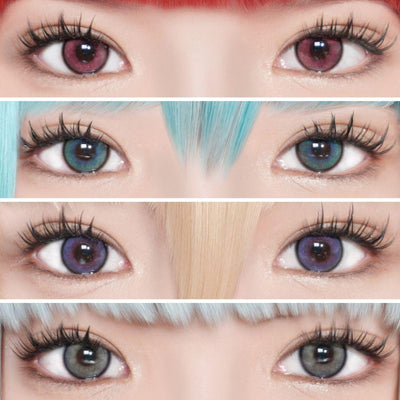
One concern people often have: can I still wear colored contact lenses if I need a prescription? Absolutely. EyeCandys carries prescription colored contacts across a wide range of powers. Whether you're correcting myopia, hyperopia, or astigmatism, you don't have to choose between sharp vision and a look you love.
If you haven't had an eye exam recently — especially if night vision has become a concern — now is the right time to get your prescription updated, then shop with confidence knowing your eyes are properly corrected.
Frequently Asked Questions
It depends on the cause. If poor night vision is due to uncorrected myopia, hyperopia, or astigmatism, the right prescription contact lenses can significantly improve how clearly you see at night. If the cause is cataracts, nyctalopia, or a retinal condition, contacts alone won't fix it.
Adults should have a comprehensive eye exam every one to two years. If you're noticing changes in night vision, schedule an appointment sooner.
Yes. Contacts that are the wrong fit, overused, or don't correct astigmatism can cause optical aberrations that are especially noticeable at night.
Some decline in night vision is normal with age, but these changes are diagnosable and often treatable. An eye exam can determine the underlying cause.
Nyctalopia is the clinical term for night blindness. It is a reduced ability to see in low-light conditions and requires identifying the underlying cause.
Ready to See Clearly — Day and Night?
Your eyes are telling you something. Don't ignore it. Book your eye exam, get your prescription updated, and then find your next pair of lenses at EyeCandys. We carry prescription colored contacts across a wide range of powers — so you can have great vision and a look you love.