

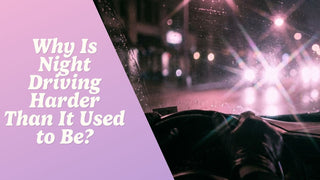
You signal, check the mirror, and pull onto the highway the way you have a thousand times before. Then a set of headlights rounds the bend ahead, and for a moment the road disappears behind a white haze. Your eyes squint, your hands tighten on the wheel, and it takes a beat longer than it should to see the lane markings again. If this scene feels more familiar with each passing year, the reaction is not in your head. Night driving is measurably harder for most adults than it was a decade ago, and the reasons involve both the eyes behind the wheel and the vehicles sharing the road.
What Counts as Difficulty Driving at Night
Difficulty driving at night describes a cluster of related struggles: trouble judging distance in low light, discomfort or temporary blindness from oncoming headlights, blurry or hazy road signs, and a general sense that the road looks dimmer than it used to. Eye care professionals sometimes group these complaints under the term night driving difficulty, and they are among the most common reasons adults over 40 schedule an eye exam. The symptoms rarely appear overnight. Instead, they build gradually, which is part of why so many drivers assume the change is simply a normal part of getting older rather than a sign worth investigating.
Why Night Vision Changes With Age
The eye relies on two types of light-sensing cells: cones, which handle color and detail in bright conditions, and rods, which take over in dim light and are responsible for night vision. Rod cells lose sensitivity with age, and the process of regenerating the visual pigment they depend on, called rhodopsin, slows down as well. According to the American Academy of Ophthalmology, aging brings a long list of eye changes, including a smaller pupil, a yellowing and thickening lens, and reduced tear production, all of which chip away at how well the eyes perform after dark. None of these changes happen suddenly. They accumulate year over year, which is why night driving that felt effortless at 25 can feel genuinely taxing at 45 or 55.

The Role of Pupil Size and Dark Adaptation
Pupil size is one of the biggest, and most overlooked, factors in night driving comfort. A younger eye's pupil can dilate to roughly 7 to 8 millimeters in darkness, letting in a large amount of available light. By the time a person reaches their 60s, that maximum dilation often shrinks to closer to 4 to 5 millimeters. Less light reaching the retina means a dimmer, less detailed view of the road. NIH research on aging eyes also points to slower dark adaptation, meaning it takes longer for older eyes to adjust after stepping out of a well-lit gas station or after a burst of headlight glare passes. That lag of a second or two, repeated dozens of times on a single nighttime drive, adds up to real fatigue and real risk.
Cataracts and the Slow Fade of Night Clarity
Cataracts are one of the most common eye conditions linked to night driving trouble, and they develop so gradually that many people do not notice until the symptoms are pronounced. The lens of the eye, normally clear, becomes cloudy as proteins within it break down over time. Light passing through a cataract-affected lens scatters rather than focusing cleanly on the retina, which is why headlights and streetlights start to look like they have halos or starbursts around them. Cataract symptoms commonly include this kind of glare sensitivity along with faded colors, blurred vision, and a general sense that everything looks dimmer than it should. By age 75, more than half of Americans will have had a cataract or cataract surgery, which explains why so many drivers first notice their vision changing specifically at night, long before it affects daytime tasks.
Glaucoma and Peripheral Vision Loss
Glaucoma affects the optic nerve rather than the lens, and its earliest symptom is often a gradual loss of peripheral vision that goes unnoticed until it is fairly advanced. At night, that narrowed field of view becomes far more consequential. A pedestrian stepping off a dark curb, a cyclist without reflective gear, or a vehicle merging from the side can slip outside a driver's usable field of vision entirely. Because glaucoma rarely causes pain or obvious blur in its early stages, regular eye pressure checks are the only reliable way to catch it before it changes how safely someone can drive after dark.
Macular Degeneration and Contrast Sensitivity
Age-related macular degeneration affects the macula, the part of the retina responsible for sharp, central vision. While it is more commonly associated with reading difficulty, it also reduces contrast sensitivity, which is the ability to distinguish an object from a similarly shaded background. On a well-lit street this might go unnoticed. On a rural road with minimal lighting, low contrast sensitivity makes it harder to spot a dark-clothed pedestrian, an unlit road edge, or a deer stepped just off the shoulder. Contrast sensitivity, not sharpness alone, is one of the strongest predictors researchers use when studying who struggles most with night driving.
Why Modern Headlights Make Glare Worse
Aging eyes are only half of the story. The vehicles on the road today are genuinely brighter than they were a generation ago. LED and high-intensity discharge headlights have largely replaced older halogen bulbs, and while they improve visibility for the driver using them, they can be uncomfortably intense for oncoming traffic. IIHS headlight research has found real variation in how well headlight systems are aimed and how much glare they throw toward other drivers, with a meaningful share of tested systems rated marginal or poor specifically because of excessive glare. Taller vehicles compound the problem, since higher-mounted headlights shine more directly into the eye level of drivers in cars that sit lower to the ground. The result is a road environment that puts more strain on every driver's eyes, regardless of age, but hits aging eyes with reduced glare recovery the hardest.

Screens, Devices, and Digital Eye Strain
Modern life adds another layer of difficulty that has little to do with age. Hours spent looking at phone, computer, and tablet screens during the day contribute to digital eye strain, a collection of symptoms including dryness, fatigue, and temporarily reduced focusing ability. Eyes that are already tired from a full day of screen use are less equipped to handle the demands of night driving, which requires quick focus shifts between the dashboard, mirrors, and the road ahead. Reducing digital eye strain during the day is a small but genuine way to arrive at a nighttime drive with fresher, more responsive eyes.
Related Reading
- How Effective Are Night Driving Glasses? What They Can and Can't Do
- Night Vision Getting Worse? Get an Eye Exam
- Blue-Light Glasses Explained: How They Work and When to Use Them
- Reduce Digital Eye Strain with Simple Everyday Habits
- How Often Should You Get an Eye Exam? EyeCandys Guide By Age
Common Symptoms Worth Paying Attention To
Not every case of night driving difficulty signals a serious problem, but certain symptoms deserve attention rather than being brushed off as normal aging. These include halos or starbursts around lights, sudden double vision in one or both eyes, a noticeable delay before eyes adjust after glare passes, difficulty reading street signs until they are very close, and a general sense that night vision has worsened over just a few months rather than gradually over years. A rapid change, in particular, is different from the slow decline associated with normal aging and warrants a prompt eye exam rather than a wait-and-see approach.
Correcting Refractive Errors First
Before assuming night driving trouble points to a deeper eye condition, it is worth ruling out the simplest explanation: an outdated or imprecise glasses prescription. Even a small amount of uncorrected nearsightedness or astigmatism becomes far more noticeable in low light, because the pupil dilates and lets in light through a wider portion of the lens, exaggerating any optical imperfection. An updated prescription, particularly one that accounts for how the eyes perform specifically in dim conditions, resolves a surprising share of night driving complaints on its own. Anyone whose last eye exam was more than a year or two ago should treat that as the first step before exploring other solutions.
Anti-Reflective Coatings and Lens Choices
For those who do need corrective lenses, the coating and lens type matter as much as the prescription itself. Whatever lens and coating you choose, clean your lenses routinely with a proper eyeglass cleaner, since smudged lenses scatter light and can degrade night vision all on their own. Anti-reflective coatings reduce the internal reflections that can create ghosting and halos around bright lights, which is a common complaint among glasses wearers driving at night. Coatings labeled specifically for glare reduction go a step further, filtering some of the scattered light that comes from oncoming headlights and streetlights. Lens shape matters too. Frames with a smaller vertical height can cut off useful peripheral vision, which is particularly relevant while merging or checking blind spots after dark.

The Truth About Yellow-Tinted Night Driving Glasses
Yellow-tinted glasses marketed specifically for night driving are widely available, and their claims are worth examining honestly. The tint theoretically increases contrast by filtering blue wavelengths of light, but controlled studies have consistently found that yellow lenses do not measurably improve visual performance in the dark and can, in some conditions, reduce the total amount of light reaching the eye when it is needed most. A clear, well-fitted lens with a genuine anti-reflective coating from an eye care provider offers more reliable benefit than a tinted lens marketed with bold nighttime claims. Anyone considering night driving glasses should treat the tint itself as a matter of personal comfort rather than a scientifically proven fix.
Adjusting Habits Behind the Wheel
Some of the most effective solutions have nothing to do with the eyes at all and everything to do with habits behind the wheel. Looking slightly to the right edge of the lane, rather than directly at oncoming headlights, reduces glare exposure while still keeping the road ahead in view. Dimming the dashboard display prevents the eyes from constantly readjusting between a bright interior and a dark road. Cleaning the windshield, inside and out, removes the smudges and residue that scatter light and intensify glare far more than most drivers realize. Cleaning the headlights also enhances night visibility. Driving at an appropriate speed for nighttime conditions also compensates for the fact that stopping distance perception is naturally less precise in low light, giving the eyes and brain more time to process what they are seeing.
Keeping the Vehicle in Good Optical Shape
The car itself plays a bigger role in night visibility than most drivers consider. Headlights accumulate a hazy, yellowed film over years of sun exposure and road debris, and that haze can cut light output by a significant margin, making it harder to see and easier for other drivers to notice glare from a poorly aimed beam. Having headlights aimed correctly, cleaning them routinely with appropriate cleaning and polishing agents, using a mechanic-verified alignment check, prevents them from either blinding oncoming traffic or failing to illuminate the driver's own lane properly. Worn wiper blades that leave streaks are another overlooked culprit, since those streaks catch and scatter oncoming light directly across the driver's line of sight.
Nutrition and Eye Health Over Time
Long-term eye health is influenced by more than genetics and age. Diets rich in lutein and zeaxanthin, found in leafy greens, eggs, and orange and yellow vegetables, are associated with better macular health over time, which supports the contrast sensitivity night driving depends on. Vitamin A plays a direct role in the function of rod cells, and a deficiency, while uncommon in developed countries, can measurably worsen night vision. None of this replaces medical treatment for a diagnosed eye condition, but consistent nutritional habits support the eyes' long-term ability to perform well in low light.
When to See a Doctor
A comprehensive eye exam should be the first stop for anyone noticing new or worsening difficulty driving at night, and sooner rather than later if the change has been rapid. An eye doctor can distinguish between a simple prescription update, early cataracts, glaucoma, or a retinal condition, each of which calls for a different response. Adults over 60, or anyone with diabetes, a family history of glaucoma, or a personal history of eye injury, should have their eyes checked at least once a year even without noticeable symptoms, since several of the conditions discussed here progress silently before symptoms appear. Sudden vision loss, sudden double vision, or a rapid increase in halos around lights are not symptoms to wait out. Those warrant a same-week appointment rather than a routine one.

Building a Night Driving Routine That Works
Once the underlying cause has been identified or ruled out, the most effective approach combines several small changes rather than relying on one fix. An updated prescription with an anti-reflective coating handles the optical side. Clean glass, aimed headlights, and fresh wiper blades handle the vehicle side. Slightly reduced speed and deliberate gaze habits handle the behavioral side. Together, these changes address the layered nature of why night driving feels harder now: it is rarely one single cause, but a combination of an aging visual system meeting a brighter, more glare-prone road environment.
Final Thoughts
Driving at night getting harder is not something to accept quietly as an inevitable cost of getting older. Much of it traces back to identifiable, addressable causes: a pupil that lets in less light, a lens that has started to cloud, an outdated prescription, or headlights that are simply brighter than the ones on the road a decade ago. An eye exam, the right lens coatings, and a few adjusted habits behind the wheel go a long way toward making the drive home after dark feel as manageable as it once did.
Clear vision starts with the right eyewear. EyeCandys offers a wide selection of glasses frames built for everyday comfort and clarity, along with blue light filtering options for anyone spending long hours on screens before getting behind the wheel.
FAQ
Why does driving at night feel so much harder than it used to?
Aging brings a smaller pupil, a lens that yellows and clouds slightly, and slower dark adaptation, all of which reduce how much light reaches the retina. Combined with brighter modern headlights, these changes make glare and blur more noticeable than in previous years.
Are yellow-tinted night driving glasses actually effective?
Controlled research has not found a measurable visual benefit from yellow-tinted night driving glasses, and in some conditions they can reduce the total light reaching the eye. A properly fitted prescription lens with an anti-reflective coating is a more reliable option.
Could difficulty driving at night be an early sign of cataracts?
Yes. Glare, halos around lights, and reduced night clarity are among the earliest and most common cataract symptoms, often noticed at night well before they affect daytime vision.
How often should adults get an eye exam if they drive at night regularly?
Adults over 60, and anyone with diabetes or a family history of eye disease, should have a comprehensive eye exam at least once a year. Adults under 60 without risk factors are generally advised to have one every one to two years, or sooner if symptoms appear.
Does an anti-reflective coating really reduce headlight glare?
Yes, with limits. Anti-reflective coatings reduce the internal reflections that create ghosting and halos, and the benefit is backed by science. No coating eliminates glare entirely, though, and glare caused by eye conditions such as cataracts or macular degeneration will not be fixed by any lens coating.
Is it normal for night vision to get worse gradually, or should any change be checked?
A slow, gradual decline over several years can be a normal part of aging. A rapid change over weeks or months is not typical and should prompt a same-week eye exam to rule out a treatable condition.
Explore Eyewear Built for Everyday Life
A well-fitted pair of glasses with the right lens coating can make a real difference after dark. Browse the full eyewear collection and find a frame that fits both your prescription and your style.