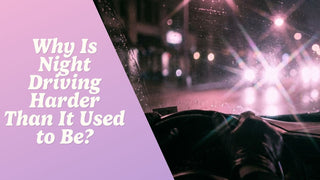

There is a certain kind of frustration that comes with driving at night. The road is familiar, but suddenly everything feels harsher than it should. Headlights seem too bright. Street signs feel harder to read. The whole experience starts to feel more tiring, more tense, and a little less clear than it used to.
That is usually the moment people start wondering whether night driving glasses could help.
It is an appealing idea. A simple pair of glasses that promises less glare, better contrast, and a more comfortable drive after dark sounds like exactly the kind of easy fix most of us would love to find. But like many products in the vision space, the real answer is a little more nuanced than the marketing makes it seem.
At a high level, night driving glasses may help some people feel a bit more comfortable, especially if reflections on their lenses are part of the problem. But they are not a one size fits all solution, and they do not correct the underlying causes of poor night vision. In many cases, the bigger issue is not the glasses themselves. It is what is actually making nighttime driving harder in the first place.
That is what makes this topic worth unpacking. If you are searching for answers, you are probably not just looking for a product recommendation. You are trying to figure out why driving at night feels more difficult and whether these glasses are truly worth trying.
What Are Night Driving Glasses?
Night driving glasses are usually marketed as eyewear designed to reduce glare from headlights, streetlights, and reflective road surfaces. Most products in this category fall into one of two groups.
The first is yellow tinted glasses, which are commonly advertised as a way to improve contrast and cut glare at night. These are the pairs many people picture when they hear the phrase night driving glasses. They are often sold as a simple visibility upgrade for anyone who feels uncomfortable driving after dark.
The second is glasses with anti reflective or anti glare coatings. These may be prescription or non prescription, and they are designed to reduce reflections on the lens surface itself. Some night driving products combine both a tint and a coating, which is part of why this category can feel confusing to shoppers.
That confusion is important to clear up early. A pair of prescription lenses with anti reflective coating is not the same thing as a generic yellow tinted pair of glasses sold as a quick fix. They may both be marketed around glare, but they do not work in the same way and they do not offer the same potential benefit.
Do Night Driving Glasses Actually Work?
The honest answer is that they may help a little for some people, but not always in the way the marketing suggests.
If someone is bothered by reflections bouncing off the surface of their glasses, anti reflective coating can help reduce that distraction. That is one of the more practical and credible ways eyewear can improve comfort at night. For someone who already wears prescription glasses, that kind of lens upgrade may make a real difference in how busy or harsh light sources feel while driving.
Yellow tinted night driving glasses are more controversial. They are often marketed as though they dramatically reduce glare and improve nighttime visibility, but that claim is not strongly supported by evidence. Some people say they feel more comfortable wearing them, and there may be a subjective sense of improved contrast for certain users. But comfort is not always the same thing as sharper vision or better driving performance.
That is where this topic can get misleading online. A product may feel soothing or visually different without actually improving how well someone sees in low light. Because yellow tinted lenses can also reduce the total amount of light entering the eye, they may not always be ideal in already dim conditions.
So do night driving glasses work? Sometimes, in a limited comfort based sense. But if the goal is to fix true night vision problems, reduce halos, or correct blur caused by an underlying issue, they are unlikely to be the full answer.
Why Driving at Night Can Feel So Difficult
One reason this question gets so much search traffic is because night driving can become frustrating in ways that are hard to describe. Many people know something feels off, but they are not sure whether the problem is glare, focus, fatigue, or something else entirely.
Nighttime driving is simply more visually demanding than daytime driving. There is less available light, more contrast between dark roads and bright headlights, and more pressure on the eyes to adjust quickly between different levels of brightness. If your vision is even slightly off, you are much more likely to notice it after sunset.
There are also several common reasons night driving feels harder than it used to.
An outdated prescription
If your glasses or contacts are no longer correcting your vision as well as they should, the issue may become especially obvious at night. Road signs may look soft, headlights may bloom more than usual, and lane markings may feel harder to track.
Astigmatism
Astigmatism is one of the most common culprits behind streaky lights, halos, starbursts, and blur at night. Someone with astigmatism may notice that headlights do not just look bright. They look smeared, stretched, or harder to focus on.
Dry eyes
A dry or unstable tear film can affect how smoothly light moves through the eye. That can create fluctuating clarity, blur, halos, or a filmy effect that becomes more noticeable in low light.
Cataracts or age related changes
As the eye changes with age, glare sensitivity often becomes more noticeable. Cataracts in particular can make lights appear hazy, haloed, or overwhelmingly bright.
Dirty lenses or windshields
Sometimes the explanation is surprisingly simple. A layer of dust, fingerprints, streaks, or interior windshield film can scatter light and make nighttime glare much worse than it needs to be.
Eye strain and fatigue
Driving when your eyes are tired can make everything feel harder, especially after a long day, during bad weather, or on poorly lit roads.
Night myopia or other low light vision changes
Some people notice that their vision is noticeably less sharp in dim conditions, even if they do fairly well during the day. That does not always mean something serious is wrong, but it is a good reason to pay attention to changes in visual comfort and clarity.
Who Might Benefit From Night Driving Glasses
Night driving glasses may be most useful for people dealing with mild comfort issues rather than major night vision problems.
That might include someone who already wears prescription glasses and is thinking about adding anti reflective coating to help reduce distracting reflections. It could also include someone who finds that bright lights feel visually busy on their lenses and wants to make nighttime driving a little less irritating.
They may also appeal to people who are curious about trying small comfort aids and understand that the improvement, if there is one, may be modest. In that case, the value is less about dramatically better vision and more about slightly improved driving comfort.
The key word here is expectations. These glasses are more likely to be a small quality of life adjustment than a major transformation. Someone with a mild glare issue may feel they are worth trying. Someone dealing with blurred signs, halos, or worsening night vision likely needs a deeper solution.
Related Reading
When Night Driving Glasses Are Not Enough
If driving at night has suddenly become much harder, or if bright lights now seem to have halos, starbursts, or a foggy glow around them, it is worth looking beyond a quick fix product.
This is especially important if nighttime driving feels less safe than it used to. A pair of specialty glasses should never become a substitute for proper vision care when something has clearly changed.
It is a good idea to pay closer attention if:
-
You have not had an eye exam in a while
-
Your prescription feels slightly off
-
You notice increasing sensitivity to headlights
-
Road signs are harder to read than they used to be
-
You already wear corrective lenses and still struggle
-
The difficulty came on recently or has gotten noticeably worse
Glasses marketed for glare may help with comfort in some cases, but they should not delay someone from dealing with a real vision issue.
Night Driving Glasses vs. Anti Reflective Coating vs. Blue Light Glasses
These categories are often lumped together, but they are not interchangeable.
Night driving glasses are usually marketed specifically for glare reduction and often feature yellow tinted lenses. The pitch is usually centered on making nighttime driving easier and more comfortable.
Anti reflective coating is something different. It is applied to clear lenses, often prescription lenses, to reduce reflections on the surface. For many people, this may be the more practical feature to ask about because it addresses lens reflections without relying on tint.
Blue light glasses are generally intended for screen use, not road use. They are designed around digital eye strain and screen exposure, not nighttime visibility or headlight glare.
For readers, this section helps organize a category that is often blurred together in online marketing. For SEO, it also helps the article capture adjacent questions from people comparing different kinds of eyewear.
Tips to Make Night Driving Easier
Even if night driving glasses are not a magic fix, there are a few things that can make driving after dark feel more manageable.
Clean your windshield, especially the inside. That light film you barely notice during the day can make glare bloom badly at night.
Clean your glasses regularly. Dust, smudges, and fingerprints scatter light.
Make sure your prescription is up to date. Small shifts in vision become much more obvious in low light.
Ask about anti reflective coating if you wear glasses. It may help reduce lens reflections and make bright lights feel less distracting.
Dim dashboard lights if they feel too bright. Excess cabin brightness can make it harder for your eyes to adapt to darkness outside the car.
Avoid looking directly at oncoming headlights. Keep your gaze where it needs to be on the road ahead.
Do not ignore dry eye symptoms. If your vision fluctuates, feels filmy, or gets worse late in the day, dryness may be part of the issue.
Book an eye exam if nighttime driving has become noticeably more difficult.
This kind of practical advice strengthens the article because it gives readers immediate steps they can take, even if they never buy a pair of night driving glasses.
Are Night Driving Glasses Worth Trying?
They can be worth trying in a narrow sense, especially if you are exploring ways to make night driving feel more comfortable and you understand their limits.
If mild glare or lens reflections are your main complaint, certain lens features may offer some benefit. If your issue is more about discomfort than true visibility loss, a small improvement may feel worthwhile.
But if you are hoping for a dramatic improvement in nighttime vision, the answer is more complicated. Night driving glasses are unlikely to solve problems caused by astigmatism, dry eye, cataracts, or an outdated prescription. In those cases, the better investment is usually making sure your vision correction is accurate and addressing the root cause directly.
For many drivers, that means a proper eye exam and, if needed, better prescription lenses or anti reflective coating rather than relying on generic yellow tinted glasses alone.
The Bottom Line
Night driving has a way of making even small vision issues feel bigger. What is easy to ignore during the day can become impossible to miss after dark, when every headlight feels brighter, every reflection feels sharper, and every little bit of blur feels more distracting.
That is part of why night driving glasses continue to appeal to so many people. They promise a simple fix to a very real frustration. But in most cases, the smartest approach is not looking for a miracle product. It is getting honest about what your eyes are actually struggling with.
If the issue is mild lens reflection, anti reflective coating may help. If the issue is astigmatism, dry eye, cataracts, or an outdated prescription, a pair of yellow tinted glasses is unlikely to solve it. The best solution is usually the one that matches the real cause, not just the symptom that is easiest to market.
So, how effective are night driving glasses? For some people, they may offer a modest comfort boost. For others, they may be more hype than help. Either way, the goal should not just be to make night driving feel different. It should be to make it feel clearer, safer, and less stressful for the long haul.
FAQ
- Do yellow night driving glasses reduce glare?
They are often marketed that way, but the evidence behind those claims is limited. Some people say they feel more comfortable wearing them, but that does not necessarily mean they improve nighttime driving performance.
- Are night driving glasses safe to use?
They are generally safe to wear, but they should not be treated as a substitute for proper vision correction or an eye exam if your night vision has changed.
- Can night driving glasses help with astigmatism?
Not really. Astigmatism usually requires proper corrective lenses, and generic night driving glasses are unlikely to fix the streaking, halos, or blur associated with it.
- Is anti reflective coating better than yellow tinted lenses?
For many people, yes. Anti reflective coating can reduce reflections on the lens surface without relying on tint, which may make it a more practical option for prescription wearers.
- Why do headlights look blurry at night?
Common reasons include astigmatism, dry eyes, cataracts, outdated prescriptions, and other changes in how light enters the eye.
- When should I get my eyes checked for night driving problems?
If night driving has become more difficult, glare feels worse than before, or lights have halos or starbursts around them, it is a good idea to schedule an eye exam.