
Introduction
Magnetic nail polish is one of those trends that looks like it should require a professional setup, then surprises everyone by being… actual science in a bottle. It’s the polish behind cat eye nails and velvet nails, where a single coat can shift from a normal shimmer into a dimensional beam of light that moves when the nail catches the sun.
If the effect has ever made you wonder what’s going on in there and whether it’s safe to wear, this article breaks it down clearly. You’ll learn how magnetic polish creates that signature pattern, what’s typically in these formulas, what the real safety considerations are (especially for gel systems), and why nail stickers are an ideal alternative for anyone who wants the look without the mess or the extra risk factors.
What Is Magnetic Nail Polish
Magnetic nail polish is a nail color formula that contains very fine, magnet-responsive pigment particles mixed into the polish. When the polish is still wet or uncured, those particles can shift positions. A magnet placed close to the nail creates a magnetic field that pulls the particles into a specific arrangement, which changes how the shimmer reflects light. When the polish dries or cures, the particles become locked into place inside the hardened polish film.
That’s why magnetic polish looks so different from a standard shimmer. In a typical shimmer, reflective particles stay evenly dispersed, so the nail reflects light in a uniform way. In magnetic polish, the reflective particles can be concentrated into lines, halos, and gradients. That concentration creates the illusion of depth, like the shimmer is floating inside the nail.
Cat eye vs velvet: what’s the difference
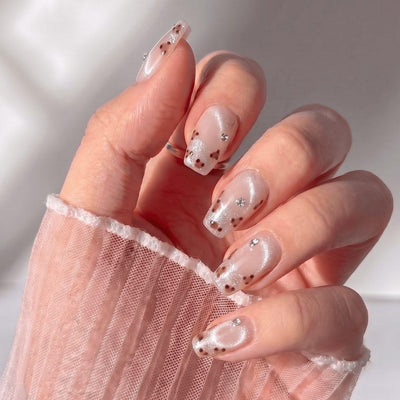
Cat eye nails usually feature a more defined streak of light, like a bright ribbon running across the nail. Velvet nails look softer and more diffused, with a plush glow that seems to “bloom” across the surface. Both effects are created by the same basic idea, but the final look depends on how the magnetic particles are arranged. Beauty coverage of the trend often highlights how magnet placement changes the final look, from a sharp beam to a softer velvet sheen. (Allure)
How Magnetic Nail Polish Works
The easiest way to understand magnetic polish is to think of it as a tiny choreography happening in a wet layer of color.
Inside magnetic polish are micro-sized pigment particles that respond to magnetic fields. While the polish is still fluid, those particles can move and rotate. When a magnet is held close to the nail, the magnetic field influences how the particles align, pulling them into a pattern. Where the particles concentrate, the nail appears brighter and more reflective. Where the particles thin out, the base color looks deeper. That contrast is what creates the dimensional “cat eye” illusion.
This is why the effect looks like it’s moving. The particles are arranged in a directional way, so the nail reflects light differently as it shifts in angle.
What makes the shimmer look three-dimensional
The visual magic is contrast plus direction. Magnetic polish doesn’t just sparkle. It creates a concentrated band of reflectivity that sits next to a darker area. The human eye reads that difference as depth, especially when the band of shimmer is curved or angled.
Several educational sources aimed at nail professionals describe magnetic formulas as gels or lacquers with magnetic pigment particles that can be “manipulated” to change how shimmer appears on the nail. (TGB Academy)
What’s Inside Magnetic Nail Polish
- Magnetic nail polish is not a totally separate category of chemistry from other nail products. The key difference is the addition of magnet-responsive pigment.
- Traditional magnetic nail polish usually includes
- Film formers and resins that create a smooth coating
- Solvents that keep the formula fluid in the bottle and evaporate as the polish dries
- Color pigments and shimmer particles for appearance
- Plasticizers and additives that influence flexibility, wear, and shine
Gel magnetic polish is structured differently
Gel polishes use ingredients that cure under UV or LED lamps to form a hardened polymer network. The formula often contains reactive components (monomers and oligomers) and photoinitiators, which help the gel cure when exposed to lamp light. Magnetic pigment is suspended in that gel matrix so the pattern can be formed before curing locks it into place.
A crucial ingredient note: some resins and other components used in nail products can be allergens for certain people. The U.S. FDA specifically notes that toluene sulfonamide/formaldehyde resin (TSFR), used in some nail polishes for durability and adhesion, has evidence of causing allergic reactions in some users. (U.S. Food and Drug Administration)
Is Magnetic Nail Polish Safe
For most people, magnetic nail polish is generally as safe as comparable non-magnetic nail polish when used as intended. The “magnetic” aspect is not what typically creates risk. The bigger safety conversation is about the product system being used and how it interacts with skin, nails, and removal routines.
Safety concerns tend to fall into four categories
Skin sensitivity and allergic reactions
Solvent exposure and ventilation
UV or LED lamp exposure for gel systems
Nail damage from improper prep or removal
The magnet itself is not the problem
A nail magnet doesn’t inject anything into the nail or skin. It’s simply a tool that influences how particles already in the polish layer arrange themselves before the polish sets. The magnetic particles remain embedded in the polish film once it hardens.
Magnetic lacquer vs magnetic gel: why the safety conversation changes
This is the part that matters most for “Is it safe?” because these two systems have different risk profiles.
Magnetic lacquer (air-dry polish)
Concerns are more about skin exposure to uncured gel ingredients, potential allergic sensitization, and UV exposure from curing lamps. Dermatologists regularly caution that gel manicures can cause brittle nails and that UV exposure from curing lamps is a factor worth protecting against. The American Academy of Dermatology recommends applying broad-spectrum SPF 30+ to hands or wearing dark, opaque fingerless gloves during gel curing to help reduce UV exposure. (American Academy of Dermatology)
Allergic reactions: what people should know
Allergic contact dermatitis is one of the most common meaningful risks tied to nail enhancements and long-wear systems, especially gels and acrylics. Research reviews describe acrylates as a significant cause of allergic contact dermatitis, with exposure occurring in many consumer and occupational settings, including nail products. (PMC)
DermNet’s clinical guidance also notes that acrylate allergy can present with itching, burning, blistering, and can sometimes show up beyond the fingers due to transfer of residues by touch (for example, to the eyelids or face). (DermNet®)
This doesn’t mean everyone will react. It means that repeated skin contact with uncured gel products increases the chance of developing a sensitivity, and once someone becomes sensitized, reactions can become more likely and more severe with future exposure.
Nail product allergies aren’t limited to gel
Even traditional polish can cause issues for some people. The FDA’s nail care guidance highlights TSFR as an ingredient with evidence of allergic reactions in some users. (U.S. Food and Drug Administration)
The key takeaway is not “avoid everything.” It’s “pay attention to skin responses and choose lower-risk options if sensitivity is a concern.”
UV lamp exposure: what matters and what doesn’t
Gel curing lamps emit ultraviolet radiation (even when marketed as LED systems, the curing process still involves UV wavelengths). The risk discussion is not about one manicure ruining health. It’s about repeated exposure over time, especially for frequent gel wearers.
The American Academy of Dermatology’s consumer guidance emphasizes protecting hands with sunscreen or fingerless UV-protective gloves during gel curing to reduce risk of skin cancer and premature skin aging. (American Academy of Dermatology)
Medical providers have echoed similar protective approaches, including fingerless gloves and sunscreen as practical risk-reduction steps for regular gel users. (University of Utah Healthcare)
If gel isn’t part of the routine, this concern doesn’t apply. It’s specific to lamp-cured systems.
Nail health and damage: what actually causes problems
Magnetic pigment itself doesn’t damage nails. Nail damage usually comes from the cycle around the manicure.
Common culprits include
Over-buffing or aggressive prep that thins the nail plate
Peeling or picking off product, which can lift layers of nail with it
Harsh removal routines done too frequently
Dehydration from repeated acetone exposure without conditioning afterward
This is why some people feel like “polish ruined my nails” when the real issue is repeated trauma from removal or prep, not the polish effect.
Who Should Be More Cautious With Magnetic Polish
Magnetic polish is not a universal “avoid,” but a few groups benefit from extra caution or a simpler alternative.
People with a history of nail product reactions
If there has been itching, swelling, blistering, rashes around the nails, or irritation after gel or acrylic services, the safest route is to avoid repeating the same exposure pattern that may have triggered a reaction. Acrylate allergy is well-documented in dermatology literature, and sensitization can persist. (PMC)
People with eczema, cracked cuticles, or skin barrier issues
When the skin barrier is compromised, irritation becomes more likely, particularly with solvent exposure and frequent hand washing.
Anyone who prefers to avoid UV lamp exposure
If reducing UV exposure is important, gel systems may not be the best fit as an everyday option. Dermatology guidance suggests sunscreen or fingerless gloves for risk reduction when gel curing is used. (American Academy of Dermatology)
Anyone who wants the look without the learning curve
Even without a safety concern, magnetic polish can be messy and time-consuming compared to other options. The effect can be stunning, but the process requires patience and clean technique.
The Easy, Less Messy Alternative: Nail Stickers
For anyone who loves the cat eye look but doesn’t want to deal with liquid polish, magnets, curing lamps, or potential skin contact with uncured products, nail stickers are the most practical alternative.
They’re also one of the best options for readers who want consistent results. Magnetic polish can vary depending on timing, thickness, and how the particles settle. Nail stickers remove that variability. The design is already built in, so the finished look is predictable.
Why nail stickers feel “safer” in practice
No UV or LED lamp exposure
This is a major advantage for readers who want to avoid lamp-cured systems altogether. Dermatology guidance focuses on protecting hands during gel curing because of UV exposure. Nail stickers bypass that entire issue. (American Academy of Dermatology)
Less risk of skin sensitization from uncured gel
Acrylate allergy is strongly associated with exposure to reactive nail ingredients, especially when they come into contact with skin before curing. Nail stickers can reduce that pathway because there’s no wet gel product being cured on the cuticle area. (PMC)
Less odor and solvent-heavy exposure during application
Traditional polish involves open bottles and solvent evaporation. Nail stickers don’t require that same exposure during application, which can be helpful for readers who dislike strong polish smells.
Less mess, faster results
Magnetic polish looks incredible, but it’s easy to smudge, and the effect can be finicky. Nail stickers are far more forgiving and typically quicker to apply cleanly.
How nail stickers can still deliver the magnetic vibe
A magnetic manicure is really about the illusion: a glowing highlight, a shifting shimmer, a jewel-toned depth. That vibe can be recreated with nail sticker finishes and designs that use
Cat eye inspired shimmers and light-beam graphics
Velvet-like gradients that mimic a soft halo effect
Pearl and metallic accents that create dimensional reflection
Jewel-tone sets that give the same rich, romantic depth seen in magnetic trends
This is the sweet spot: the aesthetic of magnetic nails without the extra tools, mess, or complexity.
A quick note on “clean” and “free-from” claims
It’s common to see nail products marketed as “non-toxic” or “free-from.” These labels can be helpful as a starting point, but they aren’t standardized across the industry, and “free-from” doesn’t necessarily mean “non-irritating for everyone.” Reporting and research have noted that products marketed as “non-toxic” can still contain chemicals of concern or substitutes that carry their own risks, especially in a lightly regulated cosmetics landscape. (TIME)
The most practical safety strategy is choosing low-exposure options, minimizing skin contact with reactive products, and paying attention to how the skin responds.
Magnetic Nail Polish Safety FAQ
Does magnetic nail polish change the nail plate
The magnetic particles sit in the polish layer, not inside the nail. The nail plate is keratin, and polish forms a film on top of it. Any nail thinning or peeling associated with manicures is typically related to removal habits or aggressive prep, not the magnetic effect.
Are magnetic pigments dangerous
In nail products, the magnetic particles are used as pigments within the polish film. The safety conversation is less about the pigment being “magnetic” and more about overall product formulation and exposure, especially for gel systems and known allergens like certain resins or acrylates. (U.S. Food and Drug Administration)
Is gel magnetic polish riskier than regular gel polish
Not inherently. The magnetic component doesn’t make gel more hazardous. The primary risk considerations are the same as with any gel: potential acrylate sensitization from skin contact with uncured product and UV exposure from curing lamps. (PMC)
How can someone tell if they’re having a reaction
Irritation from dryness tends to look like flaky cuticles and mild peeling that improves with conditioning. Allergic contact dermatitis often involves itching, burning, swelling, blister-like bumps, and persistent redness around the nail folds, sometimes spreading beyond the fingers due to transfer by touch. (DermNet®)
If symptoms persist or worsen with repeated manicures, a dermatologist can help identify triggers.
Is the cat eye trend going away
The magnetic look keeps cycling back because it photographs beautifully and works across seasons. Coverage of cat eye nails frequently describes the effect as versatile and adaptable, from subtle shimmer to statement looks, which is why it continues to trend. (Allure)
Conclusion
Magnetic nail polish works because it contains tiny magnet-responsive pigment particles that can be pulled into patterns before the polish sets, creating the iconic cat eye and velvet glow. The effect is real science, but the safety considerations are mostly the same ones that apply to nail products in general: ingredient sensitivities, ventilation, and nail-friendly removal habits. With gel systems, the conversation also includes UV exposure during curing and the well-documented risk of acrylate-related allergic contact dermatitis when uncured product contacts skin. (American Academy of Dermatology)
For readers who want the magnetic aesthetic without the mess, magnets, or lamp-cured steps, nail stickers are the perfect alternative. They deliver a high-impact, dimensional look with a simpler routine, fewer variables, and a much easier path to a clean, polished finish.